 The veil is starting to lift on medical robotics startup Mendaera as it exits stealth mode and heads toward regulatory submission with a design freeze on its first system and verification and validation imminent.
San Mateo, California–based Mendaera was founded by two former Auris Health leaders and has financial support from Dr. Fred Moll, the Auris and Intuitive Surgical co-founder who is known as the father of robotic surgery.

Dr. Fred Moll co-founded Intuitive Surgical and Auris Health. [Photo courtesy of Johnson & Johnson MedTech]
But Mendaera isn’t a surgical robotics developer. Instead, they’re working on technology that combines robotics, artificial intelligence and real-time imaging in a compact device “no bigger than your fist” for procedures including percutaneous instruments.
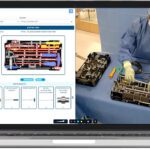
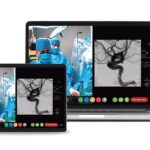
That’s according to Mendaera co-founder and CEO Josh DeFonzo, who offered new details about his startup’s technology and goals in an exclusive interview as he announced the acquisition of operating room telepresence technology developed by Avail Medsystems. (Avail was founded by former Intuitive Surgical and Shockwave Medical leader Daniel Hawkins, who’s now CEO at MRI automation software startup Vista.ai.)
“We’re a very different form factor of robot that focuses on what I’ll describe as gateway procedures,” DeFonzo said. “… It’s a different category of robots that we don’t believe the market has seen before [as] we’re designing and developing it.”
Those procedures include vascular access for delivery of devices or therapeutic agents, access to organs for surgical or diagnostics purposes, and pain management procedures such as regional anesthesia, neuraxial blocks and chronic pain management. DeFonzo declined to go into too much detail about specific procedures because the product is still in the development stage.

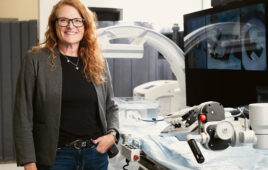
Mendaera co-founder and CEO Josh DeFonzo [Photo courtesy of Mendaera]
Preclinical testing has shown the technology has improved accuracy and efficiency compared to freehand techniques, regardless of the individual’s skill level, DeFonzo said User research spanned around 1,000 different healthcare providers ranging from emergency medicine, interventional radiology, licensed medical doctors, nurse practitioners and physician’s assistants.
“It seems to be very stable across user types,” DeFonzo said. “So whether somebody is a novice, of intermediate skill level or advanced, the robot is a great leveler in terms of being able to provide consistent outcomes. Whereas when you look at the same techniques performed freehand, the data generally tracks with what you would expect: lesser skilled people are less accurate, more experienced people are more accurate. But even in that most skilled category, we do find that the robot makes a fairly remarkable improvement on accuracy and timeliness of intervention.”

Butterfly Network won FDA 510(k) clearance in 2017 for the world’s first ultrasound-on-a-chip imaging system, the Butterfly iQ for iPhone. [Photo courtesy of Butterfly Network]
Mendaera’s aim is to eventually deploy these systems “to the absolute edge of healthcare,” DeFonzo said, starting with hospitals, ambulatory surgical centers and other procedural settings, and then pushing to alternative care sites and primary care clinics as evidence builds to support the technology.
“The entire mission for the company is to ensure essentially that high-quality intervention is afforded to every patient at every care center at every encounter,” he said. “We want to be able to push that as far to the edge of healthcare as possible, and that’s certainly something we aim to do over time, but it’s not our starting point explicitly. … As a practical starting point, however, we do see ourselves working in the operating room, in the interventional radiology suite, and likely in cath labs to facilitate these gateway procedures, the access that is afforded adjacent to a larger intervention.”
Mendaera anticipates submitting its system to the FDA for review through the 510(k) pathway by the end of 2024 with the goal of offering the product clinically in 2025.
“What we really want to do with this technology is make sure that we’re leveraging not just technological trends, but really important forces in the space — robotics, imaging and AI — to dramatically improve access to care,” DeFonzo said. “… Whether you’re talking about something as basic as a vascular access procedure or something as complex as transplant surgery or neurosurgery, we need to leverage technology to improve patient experience, we need to leverage technology to help hospitals become more financially sustainable, ultimately improving the healthcare system as we do it. So our vision was to utilize technology to provide solutions that aggregate across many millions if not tens and hundreds of millions of procedures to make a ubiquitous technology that really helps benefit our healthcare system.”
The company R&D group will work with employees from Avail on how to best add the telepresence technology to the mix.
“We see a lot of power in what the Avail team has built,” DeFonzo said. “Bringing that alongside robotic technology, our imaging partnerships and AI, we think that we’ve got a really good opportunity to digitize to a further extent not only expertise in the form of the robot, but clinical judgment, like how do you ensure that the right clinician and his or her input is present ahead of technologies like artificial intelligence that hopefully augment all users in an even more scalable way.”