Medical Design and Outsourcing

  • Home
  • Medical Device Business
    • Mergers & Acquisitions
    • Financial
    • Regulatory
  • Applications
    • Cardiovascular
    • Devices
    • Imaging
    • Implantables
    • Medical Equipment
    • Orthopedic
    • Surgical
  • Technologies
    • Supplies and Components Index
    • Contract Manufacturing
    • Components
    • Electronics
    • Extrusions
    • Materials
    • Motion Control
    • Prototyping
    • Pumps
    • Tubing
  • MedTech Resources
    • Medtech Events in 2026
    • The 2025 Medtech Big 100
    • Medical Device Handbook
    • MedTech 100 Index
    • Subscribe to Print Magazine
    • DeviceTalks
    • Digital Editions
    • eBooks
    • Educational Assets
    • Manufacturer Search
    • Podcasts
    • Webinars / Digital Events
    • Whitepapers
    • Voices
    • Views
    • Video
  • 2026 Leadership
    • 2025 Winners
    • 2024 Winners
    • 2023 Winners
    • 2022 Winners
    • 2021 Winners
  • Women in Medtech
  • Advertise
  • Subscribe

Fooling Nerve Cells Into Acting Normal

May 13, 2019 By University of Missouri - Columbia

Nerve cells, or neurons—specifically the “workhorse cells” involved in walking, breathing and chewing—can adjust to changes in the body, but they never stop working unless there is an fatal injury. What exactly signals neurons to keep acting and operating normally has not been known until now. In a new study, scientists at the University of Missouri have discovered that a neuron’s own electrical signal, or voltage, can indicate whether the neuron is functioning normally. If that voltage is absent, scientists say everything is “out of whack.”

“Our bodies have no central control system to tell individual neurons they are functioning normally, and so the neurons rely on their own electrical signals to keep track,” said David Schulz, a professor of biological sciences in the MU College of Arts and Science. “Without that electrical signal, the cell can’t tell if it is on the right track, and this can lead to changes that ultimately cause problems such as spasms and seizures. For people that have various neurological disorders, such as multiple sclerosis, epilepsy and spinal cord injuries, this discovery could affect how they are treated to help reduce or eliminate such symptoms.”

The study built on previous research by Schulz’s lab and involved examining neurons in crabs. Researchers completely shut down a crab’s nervous system and isolated neurons from their normal connections, activity and chemical environment. Then, they artificially augmented the neurons’ reality.

“We fooled these isolated neurons into thinking they were acting normally by using a computer driven process to produce their normal electrical signal,” Schulz said. “When we did this, there were very few changes in these cells, demonstrating that the cells thought it was ‘business as usual.’ It’s like providing an artificial generator when the power goes out while you are waiting for the power to be restored.”

The findings could inform future studies in people with spinal cord injuries, multiple sclerosis and epilepsy. While there is no cure yet for spinal cord injuries, researchers say this discovery could provide doctors with a way to trick neurons into thinking the body is still functioning normally. This would allow some level of normal nerve function to occur following the injury, and the affected nerves could re-join the healthy nerves above the injury.

Scientists at the University of Missouri used this microscope to discover that a neuron’s own electrical signal, or voltage, can indicate whether the neuron is functioning normally. If that voltage is absent, scientists say everything is ‘out of whack.’ Credit: University of Missouri

Related Articles Read More >

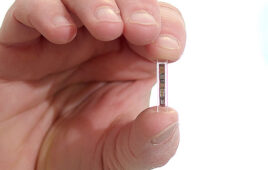
A photo of the Paradromics Connexus brain-computer interface on a fingertip.
How Paradromics designed its Connexus brain-computer interface system
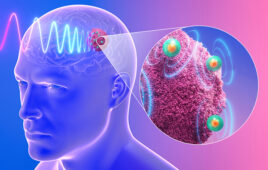
An illustration of HITMAN operating in glioblastoma cells.
MIT researchers develop injectable nanodevices that remotely kill brain tumor cells
An illustration of CSF flow through the brain.
MIT researchers find pink noise can encourage CSF flow during sleep
A photo of Kitea Health's Kitea Sensor with fingers for scale.
Intracranial sensor maker says automated testing slashed firmware development time
“mdo
EXPAND YOUR KNOWLEDGE AND STAY CONNECTED
Get the latest medical device business news, application and technology trends.

DeviceTalks Weekly

See More >

MDO Digital Edition

Digital Edition

Subscribe to Medical Design & Outsourcing. Bookmark, share and interact with the leading medical design engineering magazine today.

MEDTECH 100 INDEX

Medtech 100 logo
Market Summary > Current Price
The MedTech 100 is a financial index calculated using the BIG100 companies covered in Medical Design and Outsourcing.

New MedTech Resource

Medical Tubing

MassDevice

Mass Device

The Medical Device Business Journal. MassDevice is the leading medical device news business journal telling the stories of the devices that save lives.

Visit Website
MDO ad
Medical Design and Outsourcing
  • MassDevice
  • DeviceTalks
  • MedTech100 Index
  • Medical Tubing + Extrusion
  • Medical Design Sourcing
  • Drug Delivery Business News
  • Drug Discovery & Development
  • Pharmaceutical Processing World
  • R&D World
  • About Us/Contact
  • Advertise With Us
  • Subscribe to Print Magazine
  • Subscribe to our E-Newsletter
  • Listen to our Weekly Podcasts
  • Join our DeviceTalks Tuesdays Discussion

Copyright © 2026 Arrowfly, LLC. All Rights Reserved. The material on this site may not be reproduced, distributed, transmitted, cached or otherwise used, except with the prior written permission of Arrowfly LLC. Site Map | Privacy Policy | RSS

Search Medical Design & Outsourcing

  • Home
  • Medical Device Business
    • Mergers & Acquisitions
    • Financial
    • Regulatory
  • Applications
    • Cardiovascular
    • Devices
    • Imaging
    • Implantables
    • Medical Equipment
    • Orthopedic
    • Surgical
  • Technologies
    • Supplies and Components Index
    • Contract Manufacturing
    • Components
    • Electronics
    • Extrusions
    • Materials
    • Motion Control
    • Prototyping
    • Pumps
    • Tubing
  • MedTech Resources
    • Medtech Events in 2026
    • The 2025 Medtech Big 100
    • Medical Device Handbook
    • MedTech 100 Index
    • Subscribe to Print Magazine
    • DeviceTalks
    • Digital Editions
    • eBooks
    • Educational Assets
    • Manufacturer Search
    • Podcasts
    • Webinars / Digital Events
    • Whitepapers
    • Voices
    • Views
    • Video
  • 2026 Leadership
    • 2025 Winners
    • 2024 Winners
    • 2023 Winners
    • 2022 Winners
    • 2021 Winners
  • Women in Medtech
  • Advertise
  • Subscribe