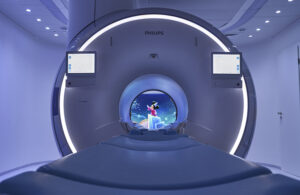
Philips is integrating Mickey Mouse, Yoda and many more Disney stories and characters into MRI systems using its Philips Ambient Experience in medical facilities in 87 countries. [Image courtesy of Philips]
Philips Ambient Experience has been around since the early 2000s, but the company is now integrating Mickey Mouse, Yoda and many more Disney characters and stories into medical facilities in 87 countries. Disney is providing the art and imagery to Philips at no cost.
Making an MRI scan less stressful experience for children enables efficient, high-quality imaging, according to Dr. Atul Gupta, chief medical officer of Diagnosis and Treatment at Philips.
Health providers can conduct more scans if kids have less anxiety, he said in an interview with Medical Design & Outsourcing. Incorporating Disney into Ambient Experience is a great example of how medtech for children needs to be designed specifically for them
“Kids aren’t just little adults. … It has to be fine-tuned and tweaked just for them,” Gupta said.
Philips held off on announcing the incorporation of Disney characters until it had clinical data to back up the move. According to Philips, research shows about two-thirds of children report feeling anxious during MRI scans.
A recently completed study involving 175 child patients (about 50-50 boys and girls, ages 6–10, at six pediatric hospitals in Europe) examined whether Ambient Experience with Disney themes could help. It found that the Ambient Experience with Disney themes reduced post-scan pediatric patient stress levels by 43% compared to pre-exam. Pauses during scans were down by 63% compared to procedures without intervention.
Here’s more of what Philips’ Gupta had to say about the incorporation of Disney characters into Philips Ambient experience. The following has been lightly edited for space and clarity.
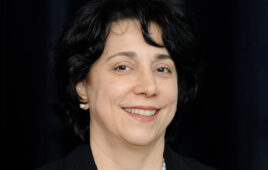
Dr. Atul Gupta, chief medical officer of Diagnosis and Treatment at Philips [Image from Gupta’s LinkedIn page]
MDO: How does Philips Ambient Experience improve the MRI experience for children?
Gupta: “When kids go to the hospital, part of the reason we know that they’re stressed is there’s nothing they have control over. Everything is done to them. We recognize this, and we’ve studied this for two decades.
“So they pick the environment they want, whether it’s a winter wonderland or a seascape or being in outer space, or now Mickey Mouse and Minnie Mouse and Pooh or Yoda or Spider-Man and many other characters. They pick it, and then the visuals of that animation is synchronized to sound and the ambient lighting in the room in a very clinically designed way. We found with the clinical data that it’s significantly lowering patient anxiety levels. It’s also helping the staff and technologists because it’s reducing scan pauses and interruption.”
MDO: Can you tell me more about how Philips worked with Disney to bring the company’s characters to Ambient Experience?
Gupta: “In the case of this solution, it’s not just putting up a movie. There are some very unique aspects that we knew at Philips because we’ve been doing this for two decades, and we worked with the Disney designers to understand. For instance, when you do a scan, you need to keep the character in the center of the screen. They need to be in the center because if you’re in that MRI and your eyes have rapid eye movement looking left and right, tracking something, it causes an artifact on the MRI. You need to have a much slower pace than kids are used to. Kids like fast-paced, quick cuts. That doesn’t work in MRI. We need them to have a lower heart rate, a lower breathing rate, lower adrenaline to keep them much more relaxed. We need to sync the ambient lighting that we’ve developed to the sound and the animation.
“There are rules of the game that help create this environment that we’ve learned through two decades of working on this, and people are using Ambient Experience not just for kids — in this case, this study was for kids — but Ambient Experiences is working for kids and adults.”

Said Philips’ Dr. Atul Gupta on incorporating Disney characters into Ambient Experience for MRI: “We found, with the clinical data, that it’s significantly lowering the patient anxiety levels.” [Photo courtesy of Philips]
MDO: What else has Philips done to improve the MRI experience for children?
Gupta: “It’s actually just one piece of what we call pediatric coaching. When a kid is coming in for an MRI, for instance, we actually have designed a solution that starts at home. We have an app called Scan Buddy, and the kid can see favorite characters like Ollie the Elephant. It familiarizes themselves with what to expect for the MRI. In fact, they can even do it with augmented reality. It’s an app that we have had for some time. Then, when they come into the waiting room of the hospital, we have something called a KittenScanner mini MRI, and they pick a character like Chris the Crocodile or Doris the Chicken, and they put the character through this mini scanner in the waiting room. Again, this is about empowering kids so they know what to expect. Then, before they get an MRI, they get to pick the character that they want, whether it’s one of the 21 Philips ambient experiences or the Disney characters, to join them in that MRI. It’s a holistic approach to empower kids, and that I think is very helpful to get kids much more comfortable.”