Medical Design and Outsourcing

  • Home
  • Medical Device Business
    • Mergers & Acquisitions
    • Financial
    • Regulatory
  • Applications
    • Cardiovascular
    • Devices
    • Imaging
    • Implantables
    • Medical Equipment
    • Orthopedic
    • Surgical
  • Technologies
    • Supplies and Components Index
    • Contract Manufacturing
    • Components
    • Electronics
    • Extrusions
    • Materials
    • Motion Control
    • Prototyping
    • Pumps
    • Tubing
  • MedTech Resources
    • Medtech Events in 2026
    • The 2025 Medtech Big 100
    • Medical Device Handbook
    • MedTech 100 Index
    • Subscribe to Print Magazine
    • DeviceTalks
    • Digital Editions
    • eBooks
    • Educational Assets
    • Manufacturer Search
    • Podcasts
    • Webinars / Digital Events
    • Whitepapers
    • Voices
    • Views
    • Video
  • 2026 Leadership
    • 2025 Winners
    • 2024 Winners
    • 2023 Winners
    • 2022 Winners
    • 2021 Winners
  • Women in Medtech
  • Advertise
  • Subscribe

Medtronic tech takeaways on PFA, RDN, M&A and R&D from top executives

November 18, 2025 By Jim Hammerand

A sphere-shaped, expandable lattice device with electrodes for cardiac ablation

Medtronic’s Affera Sphere-9 mapping and ablation catheter is designed with an expanding nitinol lattice that can provide radiofrequency ablation or PFA to treat AFib. [Image courtesy of Medtronic]

All eyes were on Medtronic today when the world’s largest medical device company shared its latest financial and operating results.

The pulsed-field ablation (PFA) business in Medtronic Cardiac Ablation Solutions (CAS) delivered strong results for the second quarter, which ended Oct. 24. We’ve got more on the financials at MassDevice and the latest on the Medtronic Diabetes separation at Drug Delivery Business News.

MDO Min-Vasive Medtech: Download our free 72-page special report with interviews from minimally invasive device development experts at major OEMs and groundbreaking startups

Here are seven more takeaways from Medtronic Chair and CEO Geoff Martha, Medtronic EVP and CFO Thierry Piéton, Medtronic SVP and Chief Scientific and Medical Officer Laura Mauri as they fielded questions from analysts after their prepared remarks.

The following has been lightly edited for length and clarity.

Where is Medtronic’s increasing its investments in SGA (selling, general and administrative) and R&D?
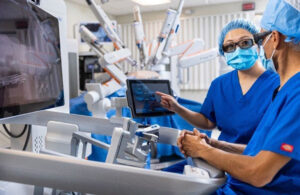
An image of the Medtronic Hugo robotic-assisted surgical system in use.

Medtronic’s Hugo robotic-assisted surgical system has a CE mark for use in Europe and is under review by the FDA. [Photo courtesy of Medtronic]

Piéton: “There are really two different categories. One is to capitalize to the maximum extent possible on the growth-drivers that are ahead of us. So there’s a significant amount of investment that’s going to CAS, to renal denervation (RDN), to Altaviva and obviously to Hugo, with a profile that’s a little bit more long term. There are other growth drivers that we’re funding at the same time, such as structural heart and neuromodulation, for example. The second category of where we’re putting investment is to make sure that we keep the leading edge from a technology perspective in the key franchises that are our bread and butter. There’s overinvestment compared to the average of the business in Cardiac Rhythm Management (CRM), for example, in the next generation of Micra, and there’s significant investment going in Cranial and Spinal Technologies (CST) to continue to develop the ecosystem that business has created around AiBLE that has enabled us to make the CST business more sticky with the customers from a device perspective and gradually improve the margins. So it’s really those two areas: Capitalize on the growth-drivers on one hand, and keep the edge on innovation in the key franchises on the other.”

Related: R&D spending stalls in the 2025 Medtech Big 100 ranking

What’s the environment for tuck-in M&A and are there areas of opportunity that are more interesting than others?

Martha: “We’re very focused on tuck-in M&A. I don’t want to tip our hat in terms of exact segments, but we definitely are prioritizing [our] higher-growth segments. A lot of that is in cardiology, some in neuroscience as well. We like that Affera profile, where you’re close to market or on the market. Early-stage or close to market would be ideal. [We’re] not afraid to make the investment that it takes to get those type of companies. But as Thierry said on where’s the R&D going, with tuck-in M&A I wouldn’t rule out some of our other key franchises that may need to augment their R&D with a little M&A, but we are more focused on these higher-growth segments. The board committees we’ve set up help with the speed and enable us to move faster. So we’ll see where it goes. But it’s definitely a big focus.”

Previously: Medtronic CEO Geoff Martha explains activist investor changes and offers updates on MiniMed and Hugo

A photo of Medtronic EVP and CFO Thierry Piéton.

Medtronic EVP and CFO Thierry Piéton [Photo courtesy of Medtronic]

Piéton: “We don’t communicate a lot about it, but we’ve got a pretty active ventures arm. It’s got over over 50 companies in which we have a stake right now. We like to use that arm to make investments in early-stage companies and it helps with some of the dilution, etc. [We] make these venture investments with a view of going higher into the capital over time, so it’s never venture for venture. And again, the pipeline there is pretty strong, and we’ll keep working that angle too, because it’s helpful to feed the pipeline for future M&A.”

Medtech Big 100: Read the Big 100 issue of MDO magazine, download our Big 100 Special Report and watch a replay of our webinar discussing the project and industry trends.

Will Medtronic keep pruning its portfolio beyond the diabetes separation?
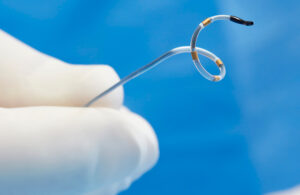
A photo of Medtronic's Symplicity Spyral renal denervation catheter with a gloved hand for scale.

Medtronic’s Symplicity Spyral renal denervation catheter uses nitinol to expand inside a patient’s renal arteries [Photo courtesy of Medtronic]

Martha: “Portfolio management is an ongoing focus for the company, and it’s really making sure that beyond diabetes — first of all, that deal is tracking and it’s on track and going well — but beyond diabetes, we just want to make sure the whole portfolio fits together, we’re getting the right amount of synergies and we can provide the right amount of focus on these generational enterprise growth-drivers like PFA, like RDN, like Altaviva and Hugo when it comes to the U.S. and others. It remains a focus and it remains a focus of one of the board committees that we set up, and we’re meeting frequently on this and looking at it.”

Related: Medtronic’s diabetes split could be a shot in the arm for both

How is Medtronic positioned as PFA moves to ambulatory surgical centers (ASCs)?

A portrait of Medtronic CEO and Chair Geoff Martha.

Medtronic CEO and Chair Geoff Martha [Photo courtesy of Medtronic]

Martha: “For PFA in ASCs, over time we do see that as an incremental opportunity for market expansion. It’ll be a bit of a shift outside of the tertiary centers to the ASCs over time, but it’ll also be a market expansion opportunity for us. It is a focus for us. We have been hiring across the company, quite frankly — particularly in neuroscience and in cardiovascular — folks that are specifically focused on market development in the ASCs for us and what our strategy is, and how our product portfolio fits there, and the resources we need including mappers. This definitely is in the calculus for Medtronic, not just our cardiac ablation business.”

Related: HRS and ACC issue guidance for cardiac ablation in ASCs

Is Medtronic PFA being held back by supply chain or mapper hiring?

Martha: “Supply [is] not holding us back. Supply’s in a good spot. And then on the mappers, mapper hiring is going well. We’re staying ahead, but I wish the buffer [was] a little bit more, because the growth is tremendous, but we are staying ahead on the mappers and the supply is not an issue. Our PFA business is really humming. I was just with a big customer yesterday. They’ve got two systems. They laid out three more that they’re going to buy, and just talking about once they put — especially Affera — once they put that in one of their hospitals how it takes all the market share or the majority of the market share there for all types of cases. There’s just all these benefits there. Feeling really, really good about that. Again, this mapper hiring has been a Medtronic — not just our cardiac ablation business — but a Medtronic effort. And our HR team is doing a hell of a job there.”

Related: Medtronic reports double-digit pay hikes for CEO Geoff Martha and other top executives

How does the exclusion of isolated systolic hypertension (ISH) from the National Coverage Decision (NCD) impact the growth of Medtronic’s RDN business?

A portrait of Dr. Laura Mauri at Medtronic.

Medtronic SVP and Chief Scientific and Medical Officer Laura Mauri [Photo courtesy of Medtronic]

Mauri: “Isolated systolic hypertension [patients] don’t have an elevation of their diastolic or the lower number of their blood pressure, it’s only the top one. We’re continuing to study those patients, but I think the important thing to note is that this population is actually pretty small for us overall. If you look at recent studies, people with hypertension over age 60, it’s less than 15% of patients who have ISH or this condition, and for patients who are younger than 60, who are half of our patients in trials and then also in practice, it’s really very unusual. … Out the gate with the NCD, if you just look at that topic we would estimate less than 10% would be affected by isolated systolic hypertension or not meet those criteria. … Overall, the final NCD makes access more practical for patients with less time delays to treatment, less restrictions. And the couple of things that they’ve talked about screening for are really things that are done in standard practice by general practitioners or internists. The other part to mention is that in their response, CMS reiterated that quality of life is a really important consideration for patients because lifestyle changes and being on many medications can be really difficult, and so they specifically said the good faith attempts are reasonable before referral, rather than specifying some mandatory minimum doses or number of medications. … Whether it’s ISH or overall, the workflow for patients to get into referral for Symplicity is really not restricted.”

Related: Medtronic names its next-gen renal denervation catheter as it builds the RDN market

Could percutaneous tibial neuromodulation cannibalize Botox in treating overactive bladder, and could it become a billion-dollar product?
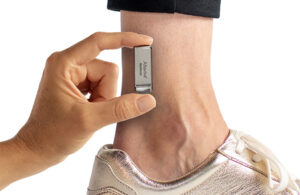
A photo of Medtronic's Altaviva device for minimally invasive implantable tibial neuromodulation (ITNM) therapy.

Medtronic’s Altaviva device has FDA approval for treating treating urge urinary incontinence with minimally invasive implantable tibial neuromodulation (ITNM) therapy. [Photo courtesy of Medtronic]

Martha: “Tibial is something I think everyone needs to invest a little bit of time in here. It’s a huge market: 46 million people in the U.S. with overactive bladder, and of that, 16 million with urinary urge incontinence where this really shines and it takes the therapy, versus sacral, which works really well and has been a great market for us. There’s been some some channel disruption in the market lately, but it’s still a great market and works really well for patients, but it does take weeks or months to get that therapy to a patient from when they start, versus tibial is less than day. So what you’re seeing here is with sacral nerve, you have to do a trial, then you have to go in for the implant, then the patient leaves without the therapy turned on and has to come back to get it activated, versus tibial where this all happens in a day and the procedure is easier. When patients are presented with all of their options — sacral nerve, tibial, Botox — they tend to choose the tibial. So we do think it will take share from Botox. And I would emphasize that we believe there’s a very strong place for sacral nerve, definitely. This is an incremental opportunity on top of our sacral business, and that sacral combined with tibial, given that it’s going to be incremental, this is going make that pelvic health business a growth-driver for the company. It’s going to meaningfully improve the growth rate of that business.”

About The Author

Jim Hammerand

Jim Hammerand is the managing editor of Arrowfly's Medical Design & Outsourcing, where he leads coverage of medtech innovation, design, engineering and manufacturing. He also reports breaking news at Arrowfly's MassDevice and contributes to our DeviceTalks podcasts and live events. Hammerand has more than two decades of journalism experience spanning newspapers, magazines, websites, live events, radio and TV news. For nearly a decade, Hammerand reported and edited business news for American City Business Journals as a reporter and digital editor at the Minneapolis/St. Paul Business Journal and then as managing editor of the Puget Sound Business Journal in Seattle. He holds degrees in journalism and management from the University of Minnesota and has won journalism awards from the Society of Professional Journalists, American Society of Business Publication Editors, and Trade, Association, Business Publications International. Connect with him on LinkedIn or by email at [email protected].

Comments

  1. [email protected] says

    November 19, 2025 at 4:53 pm

    What is oh so sad here is that Medtronic would rather spend 10x+ “investing” in outside companies rather than inventing from within. Way back in the day, they created all the medical devices themselves, which made Medtronic what they are today. Then, they turned to creating their own internal venture arm rather than just going with what worked, with limited success, such as hypoglossal nerve stimulation for sleep apnea as the most prominent one out there today. But then, as the Company finally went with wasted all of its money on monster M&A, its internal R&D collapsed to close to nothing, so all they can do now is waste more money on outside “ventures.” This is absolutely not a great strategic model for anyone to follow.

Related Articles Read More >

A photo of Fredrikson attorney Carl Numrich.
Data breaches are killing more deals than anything else, these M&A lawyers say
This is a portrait photo of Joerg Schmidt who is Medtronic's new VP of global operations and supply chain.
Medtronic taps Zimmer Biomet executive as its new supply chain VP
Promex automates 3D inspection for rigid and flexible PCBs
A portrait photo of Medical Design & Outsourcing Senior Editor Conor Hale.
Meet Conor Hale, Medical Design & Outsourcing’s new senior editor
“mdo
EXPAND YOUR KNOWLEDGE AND STAY CONNECTED
Get the latest medical device business news, application and technology trends.

DeviceTalks Weekly

See More >

MDO Digital Edition

Digital Edition

Subscribe to Medical Design & Outsourcing. Bookmark, share and interact with the leading medical design engineering magazine today.

MEDTECH 100 INDEX

Medtech 100 logo
Market Summary > Current Price
The MedTech 100 is a financial index calculated using the BIG100 companies covered in Medical Design and Outsourcing.

New MedTech Resource

Medical Tubing

MassDevice

Mass Device

The Medical Device Business Journal. MassDevice is the leading medical device news business journal telling the stories of the devices that save lives.

Visit Website
MDO ad
Medical Design and Outsourcing
  • MassDevice
  • DeviceTalks
  • MedTech100 Index
  • Medical Tubing + Extrusion
  • Medical Design Sourcing
  • Drug Delivery Business News
  • Drug Discovery & Development
  • Pharmaceutical Processing World
  • R&D World
  • About Us/Contact
  • Advertise With Us
  • Subscribe to Print Magazine
  • Subscribe to our E-Newsletter
  • Listen to our Weekly Podcasts
  • Join our DeviceTalks Tuesdays Discussion

Copyright © 2026 Arrowfly, LLC. All Rights Reserved. The material on this site may not be reproduced, distributed, transmitted, cached or otherwise used, except with the prior written permission of Arrowfly LLC. Site Map | Privacy Policy | RSS

Search Medical Design & Outsourcing

  • Home
  • Medical Device Business
    • Mergers & Acquisitions
    • Financial
    • Regulatory
  • Applications
    • Cardiovascular
    • Devices
    • Imaging
    • Implantables
    • Medical Equipment
    • Orthopedic
    • Surgical
  • Technologies
    • Supplies and Components Index
    • Contract Manufacturing
    • Components
    • Electronics
    • Extrusions
    • Materials
    • Motion Control
    • Prototyping
    • Pumps
    • Tubing
  • MedTech Resources
    • Medtech Events in 2026
    • The 2025 Medtech Big 100
    • Medical Device Handbook
    • MedTech 100 Index
    • Subscribe to Print Magazine
    • DeviceTalks
    • Digital Editions
    • eBooks
    • Educational Assets
    • Manufacturer Search
    • Podcasts
    • Webinars / Digital Events
    • Whitepapers
    • Voices
    • Views
    • Video
  • 2026 Leadership
    • 2025 Winners
    • 2024 Winners
    • 2023 Winners
    • 2022 Winners
    • 2021 Winners
  • Women in Medtech
  • Advertise
  • Subscribe