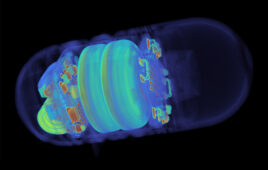
Oura makes smart rings like the Oura Ring 5, and some of its features are regulated as medical devices. [Photo courtesy of Oura]
It’s the latest move by Oura to expand its software-as-a-medical-device (SaMD) offerings. The new comes shortly after the company postponed its planned $2.2 billion initial public offering (IPO), citing “uncertainty in the IPO market.”
Medtech pay analysis: Oura discloses pay packages for top executives ahead of IPO
ISO 13485 certification incorporates measures for managing risk, supporting product safety, incorporating feedback and updating products over time. This certification “provides a strong base for Oura to develop medical device software and evaluate appropriate regulatory pathways in the United States and other markets,” the smart ring manufacturer said in a news release.
“The certification covers the design, development, manufacturing, and distribution of medical device software for digital health applications that monitor and analyze vital and non-vital physiological parameters,” the company said, listing as an example its CE-marked Fertile Window feature, which is regulated as a Class I device in the European Union. “… This certification is one of several steps in Oura’s expansion into clinical research and health systems, reflecting its investment in the quality systems needed to support work in these settings.”
Oura said it recently completed a blood pressure study with more than 300,000 participants through Oura Labs to explore whether its sensor data could deliver future regulated features.
“Trust in healthcare depends not only on what a digital health tool does, but on how it is designed, validated, monitored, and improved over time,” Oura Chief Medical Officer Dr. Ricky Bloomfield said in the announcement . “ISO 13485 strengthens that foundation as Oura continues to support research and clinical applications while building toward more clinically meaningful uses of continuous health data.”
Bloomfield offered more detail in a statement to Medical Design & Outsourcing:
“Oura already has experience developing regulated digital health software through Fertile Window, our women’s health feature that is marketed as a Class I medical device in the European Union,” he said. “We’ve also continued to expand our health capabilities through wellness features like Health Radar, which helps members identify changes in their physiological patterns and better understand their health.
“Looking ahead, we see significant opportunities to build on the continuous physiological data collected by Oura Ring to develop more clinically meaningful capabilities,” he continued, citing the blood pressure study as an example.
“ISO 13485 certification is an important step in that work,” he said. “It gives us a stronger foundation to develop medical-device software, pursue appropriate regulatory pathways in the U.S. and other markets, and evaluate opportunities for future regulated digital health software. We’re building the quality and regulatory systems now to support more clinically meaningful health features as Oura continues to evolve.”
See which medtech companies are investing the most in R&D and innovation in our free Medtech Big 100 Special Report.