Robotic arm in the Soft Robotics Lab (Picture: Soft Robotics Lab/ETH Zurich)
Researchers at ETH Zurich say they developed a biohybrid system that mimics the biological interface between bones and muscles.
This method, developed at ETH Zurich’s Soft Robotics Lab (led by Professor Robert Katzschmann), could enable improved force transition in robotics and medical implants.
Researchers combined synthetic and biologic materials to replicate the structure and function of biological tissue and the movement of living organisms. They say biohybrid robots could enhance human-machine interaction in the future. This could extend to healthcare, medicine and existing robotics, as well as implants for humans.
With contributions from researchers at the Institute for Bioengineering of Catalonia (IBEC) and the University of Barcelona, the ETH Zurich team successfully created a novel muscle-bone interface. They say the result is a fully functional model made of living biological tissue that replicates the structure of tendons and their transition to muscle (called the myotendinous junction). Meanwhile, this model allows improved integration with technical systems.
Miriam Filippi, lead author of the scientific paper and researcher at the Soft Robotics Lab, said the team based its solution on a 3D bioprinted actuator. This actuator structurally and functionally mimics the natural connection between muscle and bone.
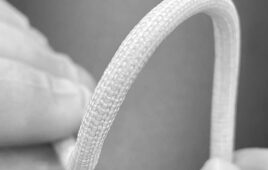
The biggest challenge faced by the researchers was the poor transmission of forces at the interface between biological and synthetic materials. This can lead to energy losses. To address this, the team looked at the natural structure of the musculoskeletal system, developing a tendon made from printed cell tissue with a stiffness level between that of living muscle and a bone-mimicking rigid segment.
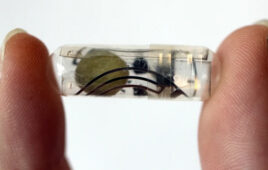
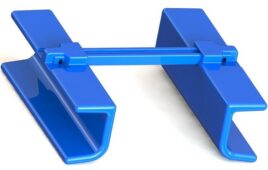
Researchers created the living actuator using 3D bioprinting with muscle cells and tendon-like anchors containing connective tissue cells printed onto a platform. A computer-assisted analysis optimized the shape and structure of the actuator. In initial application tests, the 3D bioprinted actuators demonstrated reliable and long-term stable contraction ability. The team said this marks a key advancement for the use of biohybrid components in robotic systems.
Potential future medical applications include the biomechanical modeling of the middle ear, specifically the interaction between the stapes (a small bone) and the stapedius muscle (Musculus stapedius). The researchers also suggest looking at adaptive prosthetics, biologically integrated robotic systems or lab-grown replacement tissues.
“This study represents a breakthrough in the development of functional muscle-tendon units, laying the foundation for biohybrid systems that bridge biology and robotics,” Katzschmann said in a news release. “We are taking the next major step towards musculoskeletal robots by investigating how to integrate real muscles and tendons into functional units.”