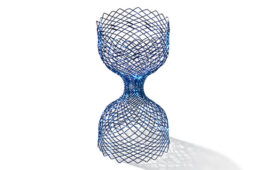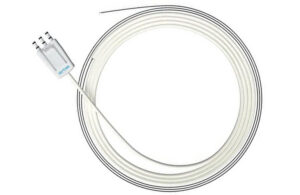
Erbe has recalled flexible cryoprobes that could loudly rupture during use. [Illustration courtesy of Erbe]
A Class I recall is the FDA’s most serious classification, reserved for medical device defects or other issues that could cause serious injury or death.
Erbe told customers to discontinue use of probes from the affected lot numbers and remove them from inventory. The FDA says the recall covers 40,952 devices.
It’s a reminder for medtech engineers that patients aren’t the only ones whose safety is at risk from design flaws or manufacturing defects.
Germany-based Erbe manufactures the single-use, flexible probes for cryogenic destruction and removal of tissue during interventional procedures and biopsies targeting foreign bodies, mucus plugs, blood clots, necrotic tissue and tissue tumors.
During procedures, carbon dioxide flows from a gas supplying source through a gas inlet inside the probe’s connector and circulates through the probe, initiating the freezing temperatures needed for treatment.
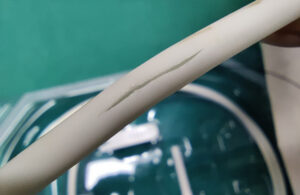
Dr. Ravi Shekhar Jha, who shared this photo of a ruptured Erbe cryoprobe, described the sound as a “sudden, very loud blast-like sound … like someone has fired a gun next to” his ear. [Photo by Dr. Ravi Shekhar Jha]
Healthcare providers and Erbe reported issues in at least 43 adverse event reports in the FDA’s Manufacturer and User Facility Device Experience (MAUDE) database, with potential serious injuries reported in at least five cases.
A healthcare professional in Indiana described the loud noise as “louder than a gunshot” and said the probe’s tubing “split where it exploded,” but no one was injured.
Another report said hospital staff heard a “very loud hissing sound” before an “extremely loud bang” that disrupted the procedures and “caused immediate pain and distress to the staff.” The technicians and the doctor experienced ear pain, tinnitus and anxiety, but the patient had no visible injury.
In a letter to healthcare professionals, Erbe said the ruptures had only been reported to occur on a section of the probe that’s outside of the patient’s body during procedures.
Tinnitus and temporary hearing loss were documented in most of the 43 adverse event reports. Minor injuries such as hyperextended fingers, hand pain and minor burns were reported in four cases. Persistent hearing loss was documented in one case.
Erbe said the device malfunction was caused by insufficient adhesive application in production leading to excessive input pressure.
“Less than 0.1% of cryoprobes manufactured during the timeframe which the problem was discovered have ruptured,” the company said. “In these rare cases, the fixation of the gas inlet inside the probe connector had loosened, allowing gas to flow into the return line. Since the return line is not designed for this volume of gas, the tubing could rupture.”
Erbe said it has improved the manufacturing process by “stabilizing the adhesive application and adding additional visual inspection steps to monitor the gluing of each cryoprobe.”