FDA Associate Director for TAP April Marrone [Photo courtesy of FDA]
TAP is meant to maximize the odds of success for innovative medical devices by connecting device developers with regulators, patient groups and experts with reimbursement and commercialization experience. To be eligible, devices must have FDA Breakthrough Device designation or be accepted into the agency’s Safer Technologies Program (STeP)
FDA Associate Director for TAP April Marrone helped launch the pilot and now leads the program. In the closing keynote of the 13th Annual Symposium on Pediatric Device Innovation at AdvaMed’s October 2026 MedTech Conference in Boston, Marrone and I discussed the program and how device developers can make the most of it, including those who are working on innovations to better serve children.
“We develop resources, we offer ecosystem engagement and we collaborate with stakeholders to try to lower and remove barriers to successful commercialization for safe and effective devices, because once these devices are shown to be safe and effective, they’re breakthrough technologies,” Marrone said. “They have that opportunity to address unmet clinical needs and also healthcare market needs.”
The following has been lightly edited for length and clarity.
MDO: Is it ever too early to apply for TAP, assuming your device has breakthrough designation or was accepted into STeP?
Marrone: “If you’re still thinking about an early feasibility study, you’re probably not thinking about what you need to stress test or pressure test with a professional society, and rightfully so. You’re thinking about what you need to do to get your proof of concept in or figure out what your design needs to be. That’s too early to take advantage of some of the offerings from TAP. As we move into MDUFA VI, we’re going to use a Goldilocks zone where you already have that first-in-human data but you’re still a few years away from initiating the pivotal study, so you’re ready to start engaging with the ecosystem and designing that significant body of evidence you need.”
When’s too late to apply for TAP?
Marrone: “The whole purpose of TAP is to work with the ecosystem before you start building out your evidence collection strategy for the clinical components, so if you’ve already done that you’re not going to be able to take advantage of what’s in TAP. If you’re ready to start that pivotal study when you come into TAP and you don’t have time to engage with the ecosystem, you’re really losing that opportunity to benefit from what TAP has to offer. We have plenty of examples now that we’ve been doing this for a while where we see conversations happen, information is exchanged, and plans change. They change more times than they don’t. Not drastically, but little things that are easy to change early on, but could end up being very time- and money-consuming later on. Small things like what do you need to do to align your CPT code descriptor with your indication for use. If you know that as you’re starting out, that makes your pathway really smooth going into CPT. But if you don’t, now you need to come back to the agency and supplement your marketing submission to maybe change some language so those things can align.”
How does TAP work in practice?
Marrone: “Once you enroll in TAP, you’re assigned two people: a TAP advisor and a lead reviewer from your review team. Your lead reviewer is there to answer regulatory questions and review your regulatory submission. The TAP advisors work with you on the nonregulatory components, provide resources, facilitate engagement with the ecosystem, and generally help troubleshoot and problem-solve and get over hurdles you may encounter. We’ve created workstreams where you’ll come in, the TAP advisor will kick you off, understand where you’re at in your device development, what your specific needs are, and the first thing we’ll do is we’ll work on what you need to be engaging with your review teams on. We create an engagement plan that says what are you doing now, what are you going to be doing next, what are you going to be doing in the future, and what do you need to talk about now, so let’s focus on that and get that feedback and then what’s next? It kind of lays that out as a plan that makes sense so you know what’s happening, your review team knows what’s happening, and you’re not having to slow down like a traditional pre-sub with a huge bolus of questions that takes three months to get back, and maybe you didn’t get all those questions answered. Now it’s the right information at the right time for you to keep your progress. So that’s the regulatory side.
“On the nonregulatory side, the goal is to help you understand ultimately what your business model needs to look like. With startups, we’re dealing with the idea people, the engineers, the clinicians, and they’re not always aware of what all of these other things are beyond the science and the clinical application. The first thing we do is we make sure you understand who your patient is, where are they coming from, what is their odyssey, how do they end up even needing to potentially need to be exposed to your device? What assumptions have you made about those patient groups and their needs how a device can help address their specific situation? You probably have a lot of assumptions, but now we’re going to let you engage with patient organizations to help you test those assumptions. We’ve seen oftentimes little design changes are made in devices after engaging with patient groups. So you know your patient.
“Now, who is providing care? It seems like a simple question, but it’s complicated sometimes. Where is that site of service going to be, what is the professional background of that provider, what credential do they need? Especially if you’re an OUS provider, you don’t always understand that who you think is going to be using your device or prescribing it may not even be possible.
“So when you know your site of service and your provider, then what do you need for that person to be able to do that? Are there codes in place? Do you need additional codes made and what does that look like? Who do you need to talk to to do that? And then, of course, who’s paying for this? Is this being bought by the hospital, is it being reimbursed for a payer, what is that payer mix?
“All of these questions get answered to help build out that strategy and know what that needs to look like early on so you have that information to build that optimized evidence collection plan, but also to tell your funders you have it mapped out and this is what it’s going to look like. And that seems to be very valuable in and of itself.”
The 2026 MDO Medtech Startups Special Report: Technical tips and actionable advice for device startups
How can an engineer make the most of these early conversations?
Marrone: “Be open and honest with us. We are not here to to make any kind of judgment. We really want to know what challenges you’re facing, and sometimes they’re not regulatory. We need to understand what you’re up against. Maybe we can help, maybe we can’t. But at least we know what the situation is, and regulators across agencies — not just the FDA — don’t always have that picture of what it’s like to be on the other side.
“We know you have your key opinion leaders. That doesn’t mean that their opinions would negate the need to potentially talk to others in societies or other groups that may have input for you. This is really an information sharing program. Professional societies really, really want to work with innovators. They want to know what’s coming down the pipeline, and they want to know what they can do to promote innovation.”
Are there myths or misconceptions about TAP you frequently debunk?
Marrone: “Innovators sometimes think we’re going to do things for them like create your reimbursement strategy, or tell you what you need to do to have CMS pay for your device. We do not offer that service. One, we don’t know, so it would be a disservice to you to tell you that. We’re here to help you know the questions you need to think about and get answers to, and then connect you with those in the ecosystem that can help you think through your strategy so you can develop your strategy yourself in the most informed way possible.”
The Autus valve was recently the first pediatric device to come out of TAP. What does that device’s FDA approval tell us about pediatric innovation?

The Autus size-adjustable heart valve can be expanded with minimally invasive procedures as the child grows. [Illustration courtesy of Edwards Lifesciences]
FDA and CMS have very different roles. How do you bring coverage and reimbursement into the conversation early?
Marrone: “Coverage comes after FDA authorization and the traditional way of thinking is what do I need to get through the FDA and then I’ll worry about what I need to do to get reimbursed after. That’s obviously not the most efficient way to go about doing things. It’s not the way the ecosystem works anymore. You don’t have a bunch of strategics waiting to buy you once you get through the FDA. You need a little bit more there. You need to have that story of how are you going generate revenue and rreimbursement is a very important component. So FDA has our requiremnts: safety and effectiveness. CMS has reasonable and necessary. It’s different regulatory requirement, different evidence needed. It’s sometimes different because sometimes being you know Uber now. The benefit is talking to the payers such as CMS or commercial care, understand what they need to see for reasonable and necessary and what can we do early on to start to address some of those things. It’s about evidence collection optimization. So that’s that’s kind of the benefit of having those conversations early, and you know, I know it’s been mentioned several times. RAPID is not for pediatric devices, but that’s really the what the basis of that program is. So TAP is the FDA facilitator of RAPID. This was a relationship that we started from the very beginning of TAP, building these bridges with our CMS colleagues to have this kind of collaboration about to be launched. But the idea is that FDA, CMS and innovators will be together before the investigational device exemption study is designed to understand what the requirements are not only for FDA but for CMS to then give the innovator the opportunity to design that study, to collect that evidence, and hopefully in an optimized, synergistic way to allow for coverage at the same time as FDA’s authorization of the data support that.”
What sort of evidence might a pediatric payer need that would be captured by a traditional device study?
Marrone: “I’m not a payer, so I can speak a lot about what FDA needs. In our experience with TAP, economic data is very helpful. With traditional CMS coverage determinations, they’re looking know health outcomes — how a patient feels, functions or survives — and that’s different than looking at safety and effectiveness. They’re also looking at the context of care: How is this being used at the point of service, how will this impact long term outcomes of the patient? It’s a different way of thinking about the data.”
Just because a device is covered, that doesn’t mean it’s going to be easy for a provider to provide, right?
Marrone: “Right. Reimbursement is a three-legged stool: coding, coverage and payment. Coverage says under whatever circumstances are laid out in the policy, this can be paid for, but it doesn’t necessarily tell you how much is going to be paid. That’s where the coding and then the payment comes in. NTAP (the New Technology Add-On Payment) can be a tool for pediatric devices. If you have breakthrough designation you can go to CMS and ask for additional payment onto the Medicare Severity Diagnosis-Related Group (DRG) for the new technology for four years to try to drive adoption. It gives you a way to get in. There’s nothing that says that you have to be applicable to the Medicare population for NTAP. Pediatric stent developer Renata applied for that, got it and set basically that price. So even though it would not be paid by Medicare, they put a number out there for others to look at. That was a good strategy for them.”
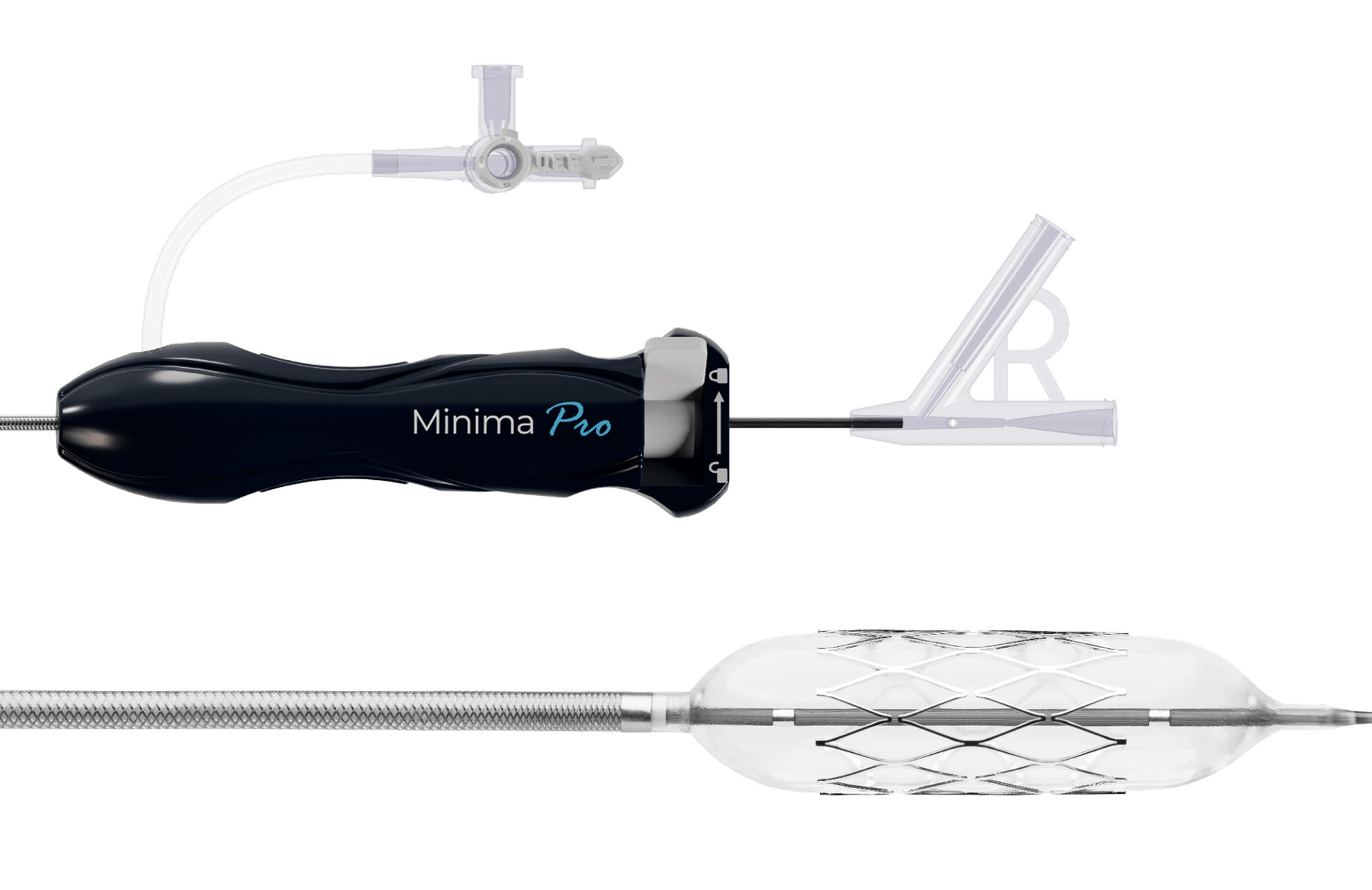
Renata Minima Pro is a balloon-expandable stent system for infant vascular stenosis that can be expanded to adult vessel sizes. [Image courtesy of Renata]
What should innovators and the wider pediatric community do differently after today?
Marrone: “You need to be thinking about the whole evidence collection strategy. Your endgame isn’t FDA authorization. Your endgame is patient access and how to get that patient access is going to be unique to everybody’s idea and their innovation and where it needs to fit into clinical care. Think about that: Where is this going to fit into clinical care? What are the barriers to doing that? Are you fitting into existing workflows, or are you completely changing workflows? What are those challenges you’re going to to face? TAP is one program, but there’s lots of other programs. The PDCs have probably collectively a lot more resources than TAP. Engage with the community and engage with each other, and the pediatric community is very collaborative.”