“We expect to have the most comprehensive and complete PFA portfolio in the market,” says J&J EP leader Michael Bodner.
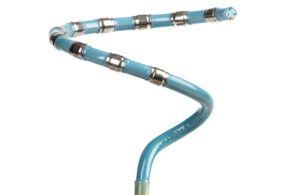
Johnson & Johnson MedTech’s Varipulse Pro pulsed field ablation (PFA) catheter uses laser-cut nitinol to expand inside a patient’s heart. [Image courtesy of J&J]
After that milestone, Medical Design & Outsourcing reached out to J&J MedTech Electrophysiology & Neurovascular Company Group Chair Michael Bodner for an update on the device developer’s PFA portfolio and his perspective on the fast-growing field.
“We’re in one of the most active periods of innovation in our history, and we expect to have the most comprehensive and complete PFA portfolio in the market,” Bodner said. “We’re committed to launching one new catheter each year to support physicians as the field evolves and we push the boundaries of arrhythmia care. By doing this, we’re advancing our PFA strategy: continuous innovation across catheter technologies, pulse sequences, mapping and imaging, backed by rigorous scientific evidence generation. And we’re just getting started.”
Editor’s note: Senior Editor Sean Whooley initiated this interview before leaving MDO, and we are now publishing the responses we recently received by email.
MDO: What is the significance of J&J’s Varipulse Pro launch in Europe?
Bodner: “As the global leader in electrophysiology, Johnson & Johnson is committed to advancing the future of cardiovascular care through continuous innovation in the field. With more than 6,400 Carto Mapping Systems installed worldwide and an integrated ecosystem spanning imaging, mapping and ablation, we’re focused on innovations that can make a meaningful difference for physicians and patients. Varipulse Pro is an important part of that.
“The launch of Varipulse Pro in Europe, Canada and some APAC and LATAM markets is an important step in shaping the next generation of arrhythmia treatment. Building on the proven safety and effectiveness of the Varipulse platform, Varipulse Pro advances our PFA portfolio. Its new pulse sequence has a lower temperature profile and delivers ablation five times faster than the previous sequence while achieving equivalent lesions.
“What we’re hearing from physicians using Varipulse Pro is that it’s intuitive and streamlined, with shorter ablation times that can support faster procedures than the previous Varipulse, without compromising efficacy.
“More broadly, we believe the future of electrophysiology will depend on integrated technologies, strong clinical evidence and close collaboration with physicians.
“That is why we are investing in a portfolio of multigenerational PFA platforms that can evolve over time and help physicians treat patients across a range of procedures from routine to complex, with Carto serving as the foundation.”
Does the company have expectations/timelines for bringing this to the U.S.?
Bodner: “We look forward to bringing the platform to patients in the U.S., subject to regulatory approval.”
What are the key features of Varipulse Pro and how does it differentiate from the previous version?

Johnson & Johnson MedTech Electrophysiology & Neurovascular Company Group Chair Michael Bodner [Photo courtesy of J&J]
“One of the most significant advancements is the new 3.8-second pulse sequence, reduced from 20.6 seconds. This matters because faster ablation can support more streamlined workflows while maintaining the efficacy and precision physicians expect.
“Varipulse Pro also continues to integrate with the Carto 3 System, including intracardiac echocardiography (ICE) imaging integration and tissue proximity indicators designed to support precise lesion delivery with zero-to-low fluoroscopy use.
“More than 100,000 procedures performed worldwide reflect the growing confidence physicians have in the Varipulse platform. The evidence supporting its safety and efficacy continues to grow. Published clinical studies have reported zero strokes and a very low adverse event rate. In our latest study, more than 400 patients completed 12-month follow-up, demonstrating an estimated 84% freedom from arrhythmia recurrence.
“These advancements underscore our commitment to continuous PFA innovation, helping physicians deliver more effective care and better outcomes for patients.”
MDO Nitinol Innovations Special Report: Pulsed-Field Ablation
How big of a differentiator is the Carto 3 mapping platform and how vital is the mapping process in these procedures?
Bodner: “Carto is a major differentiator because it does far more than create a map of the heart. It’s the foundation of our integrated electrophysiology ecosystem helping physicians deliver care across the full range of routine to complex procedures. As the most widely used mapping system in the world, Carto brings decades of physician experience, clinical trust and global scale to how electrophysiologists navigate a wide range of patients and procedures.
“Mapping is vital because ablation depends on knowing exactly where to treat, not just on delivering energy. Carto brings mapping, imaging, and therapy together so physicians can understand unique anatomies, visualize catheter positioning and make informed decisions during procedures.
“This level of integration is especially important as PFA adoption expands across a broader range of patients and procedures. It’s why we’re also continuing to advance Carto itself, including tools designed to simplify workflows while bringing advanced capabilities and deeper insights to physicians.
“At Heart Rhythm Society 2026, we introduced Cartosound Sonata in the U.S. This module uses AI-enabled capabilities to automatically transform ICE images into detailed maps, identifying and labeling cardiac structures in real time. This provides clearer insights and a stronger connection between imaging, mapping and therapy.
“For 30 years, Carto has helped shape modern electrophysiology and the way electrophysiologists deliver care around the world. It is the foundation of everything we’ve built and will continue to power the next generation of innovation in electrophysiology.”
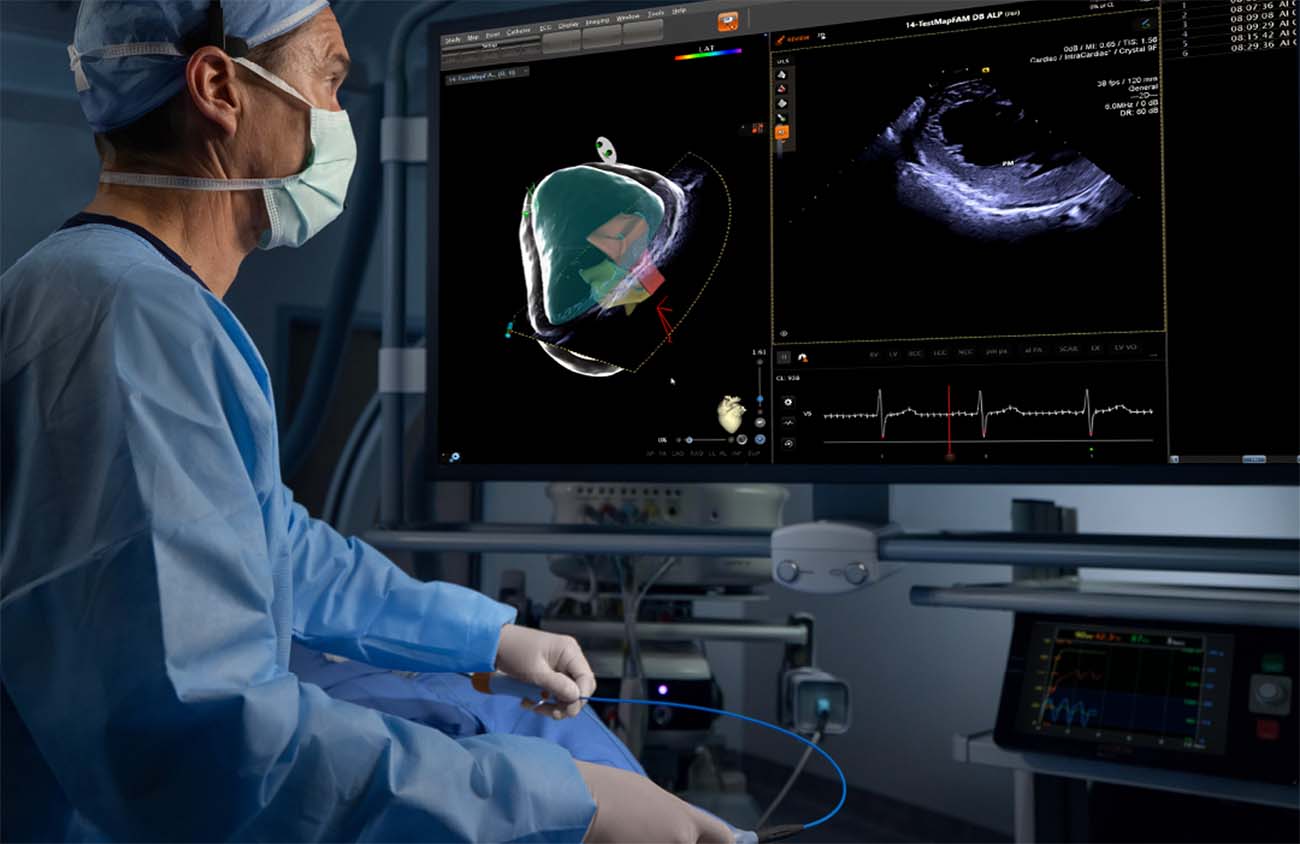
Johnson & Johnson MedTech’s Cartosound Sonata module uses artificial intelligence to transform ICE imaging into detailed maps so physicians can build models of multiple heart chambers. [Image courtesy of J&J]
Looking at the broader PFA picture, with a few years of market availability for Varipulse and its competition, what is your view as far as technology’s performance, its benefits and potential growth in the space?
Bodner: “PFA has fundamentally changed how we think about treating atrial fibrillation, and we’re still in the early stages of what this technology can achieve. Compared with traditional radiofrequency ablation, it has delivered meaningful advances in safety, efficiency, and ease of use.
“With Varipulse and our entire PFA portfolio, we’re combining pulse field ablation with the power of Carto integration, bringing mapping, imaging and therapy together in a way that helps physicians treat patients with greater confidence. Just as importantly, the platform is supported by a growing body of clinical and real-world evidence that continues to reinforce its safety and effectiveness.
“We’re also expanding the ways physicians can treat patients with heart rhythm disorders. The recent FDA approval of the Dual Energy ThermoCool SmartTouch SF platform enables physicians to use both pulsed field and radiofrequency energy through a single catheter, offering greater flexibility to tailor treatment to patient anatomy and procedural complexity.
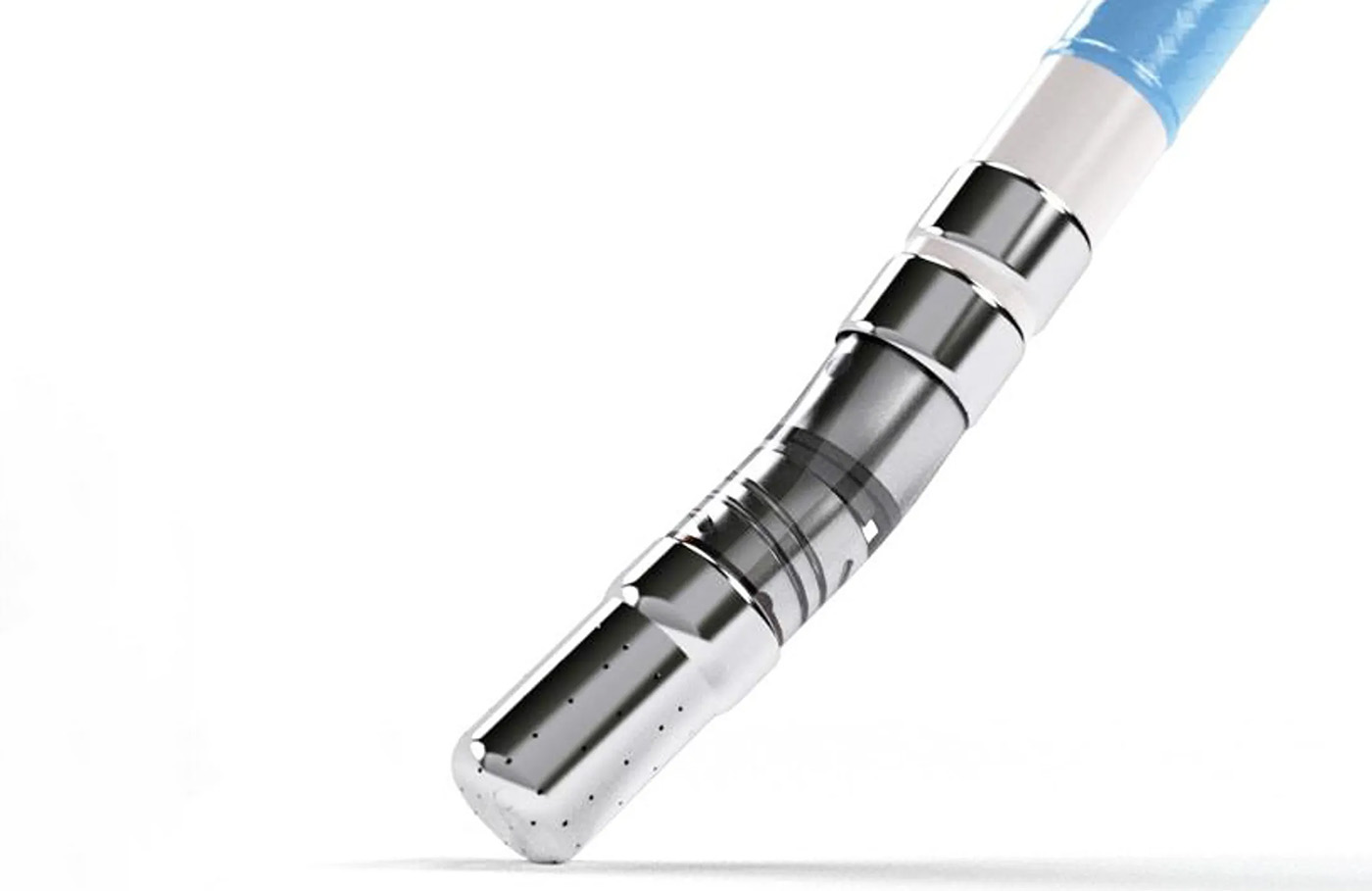
Johnson & Johnson MedTech’s Dual Energy ThermoCool SmartTouch SF catheter [Image courtesy of J&J]
Previously: How J&J’s ThermoCool SmartTouch cardiac ablation catheters use nitinol for contact-force sensing
What have been some of the biggest takeaways from the application of PFA for AFib so far?
Bodner: “What we’ve learned is that PFA is about far more than the energy source alone. Catheter design, irrigation, workflow, contact with the heart tissue, lesion durability and procedural insights all play a critical role in achieving the best outcomes.
“That’s why we’re focused on building a comprehensive PFA ecosystem powered by Carto, giving physicians the flexibility to personalize treatment across routine to complex procedures. By combining innovative technology, rigorous evidence and advanced integration in an intuitive user experience, we’re helping physicians perform cardiac ablation with greater precision, predictability and confidence.”
Related: High voltage in the heart: PFA catheter design tips from J&J MedTech
What have you heard from doctors and patients regarding PFA’s performance?
Bodner: “Physicians tell us that PFA is easier to use, more predictable and more efficient. They also value its safety profile, particularly the reduced risk of rare but serious complications such as esophageal injury, which can help them treat more patients with greater confidence. As adoption expands, however, it is equally important to understand the different safety considerations associated with PFA through continued evidence generation and clinical vigilance.
“PFA has the potential to help more patients access treatment. So, wider adoption must be supported by continued evidence about long-term effectiveness, safety and the trade-offs that emerge as PFA is used in more patients.
“At J&J, we take the long view by continuing to improve the technology, generate strong clinical and real-world evidence, and build an integrated platform that can evolve as the field advances.”
2026 Min-Vasive Medtech: Watch on-demand webinar interviews with device development experts offering advice for minimally invasive medical devices and systems