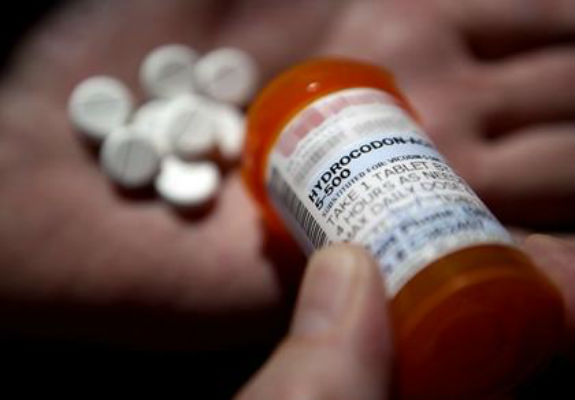
When most people think of the victims of the nation’s opioid abuse epidemic, they seldom picture members of the Medicare set. But a research letter published in JAMA Psychiatry finds Medicare beneficiaries have the highest and most rapidly growing rate of “opioid use disorder.” Six of every 1,000 recipients struggle with the condition, compared with one out of every 1,000 patients covered through commercial insurance plans.
The letter also concludes that Medicare beneficiaries may face a treatment gap. In 2013, doctors prescribed a high number of opioid prescription painkillers for this population — which put patients at risk for addiction — but far fewer prescriptions for buprenorphine-naloxone, the only effective drug therapy for opioid use disorder covered by Medicare Part D.
“The take home message is we have very effective treatments,” says Anna Lembke, one of the research letter’s authors and assistant professor at the Stanford University School of Medicine. “But they’re not widely accessible.”
Researchers analyzed 2013 Medicare Part D claims to count the number of prescriptions for Schedule II opioids and buprenorphine-naloxone. The latter drug curbs addiction by partially stimulating the same brain receptors as a stronger opioid, but with a lower risk of overdose.
The data showed the number of doctors who prescribed buprenorphine-naloxone equaled less than 2 percent of the 381,575 prescribers responsible for 56,516,854 Schedule II opioid claims. For instance, the researchers found that for every 40 family physicians prescribing pain killers, only one family physician prescribed the addiction management drug.
The letter also finds states in the northeast, including Maine, Massachusetts, and Vermont, have the highest ratio of buprenorphine-naloxone claims in the country, more than 300 times the national average.
In the last decade, the incidence of opioid addiction in the United States has reached crisis levels. According to the latest data from the Centers for Disease Control and Prevention, more than 19,000 Americans died from prescription opioid overdoses in 2014.
More than 300,000 Medicare recipients battle with opioid use disorder, according to the study. Among beneficiaries, hospitalizations due to complications caused by opioid abuse or misuse increased 10 percent every year from 1993 to 2012.
Lembke said part of the reason doctors do not prescribe more addiction management medications is because they view the problem as one of medicine’s lost causes.
“Doctors feel helpless and hopeless when it comes to addiction,” she says. “They feel that nothing can be done for them.”
And Medicare patients face additional obstacles when it comes to addiction treatment. First, Part D, Medicare’s prescription drug program, only covers buprenorphine-naloxone. Other effective treatments such as methodone are not covered, posing a barrier to access, says Lembke.
Buprenorphine-naloxone also usually requires prior authorization before a patient can receive the treatment. In addition, in order to prescribe it, physicians must take an 8-hour class, apply for a waiver and receive a special Drug Enforcement Administration number in addition to his or her regular DEA registration number. It becomes a hassle many medical professionals do not feel is worth the time, says Dr. Jonathan Chen, co-author of the study and instructor at Stanford.
“Why is it hard to [prescribe buprenorphine-naxolone], yet so easy for me to hand out things that get people dependent in the first place?” he asks.
A different JAMA study found only 2 percent of doctors nationwide had obtained the authorization needed to prescribe the medication in 2014. And over half of the nation’s counties did not have a health provider with the ability to prescribe the medication.
But the letter’s authors note that physicians who prescribe opioid painkillers have in place a relationship with their patients that makes them well-positioned — with some additional training — to take steps to intervene when opioids are being misused.
“The bottom line is it’s a heck of a lot more work to get patients off of opioids than to get them on opioids,” says Lembke.
Kaiser Health News coverage of aging and long term care issues is supported in part by a grant from The SCAN Foundation.



