Medical Design and Outsourcing

  • Home
  • Medical Device Business
    • Mergers & Acquisitions
    • Financial
    • Regulatory
  • Applications
    • Cardiovascular
    • Devices
    • Imaging
    • Implantables
    • Medical Equipment
    • Orthopedic
    • Surgical
  • Technologies
    • Supplies and Components Index
    • Contract Manufacturing
    • Components
    • Electronics
    • Extrusions
    • Materials
    • Motion Control
    • Prototyping
    • Pumps
    • Tubing
  • MedTech Resources
    • Medtech Events in 2026
    • The 2026 Medtech Big 100
    • Medical Device Handbook
    • MedTech 100 Index
    • Subscribe to Print Magazine
    • DeviceTalks
    • Digital Editions
    • eBooks
    • Educational Assets
    • Manufacturer Search
    • Podcasts
    • Webinars / Digital Events
    • Whitepapers
    • Voices
    • Views
    • Video
  • 2026 Leadership
    • 2025 Winners
    • 2024 Winners
    • 2023 Winners
    • 2022 Winners
    • 2021 Winners
  • Women in Medtech
  • Advertise
  • Subscribe

Growing human hearts: The answer is spinach leaves?

March 27, 2017 By Danielle Kirsh

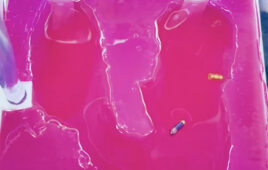
grow human hearts spinach

[Image from Worcester Polytechnic Institute]

We could someday be using spinach to grow human hearts, thanks to new research from the Worcester Polytechnic Institute, the University of Wisconsin-Madison and Arkansas State University.

One of the problems that researchers have faced is how to create a vascular system that can deliver blood deep into developing tissues. There hasn’t been much success with 3D printing vascular networks to provide the transportation for oxygen, nutrients and other essential molecules that allow for continued tissue growth.

Even though plants and animals transport fluids differently, they have similar vascular structures.

The research team stripped the plant cells from spinach leaves and pushed fluids and microbes that were similar to the size of human blood cells through the remaining vascular network of the spinach leaves. The spinach veins were then seeded with human cells that come from blood vessels. This allows for the leaves to grow healthy heart muscles that can help treat heart attack patients.

“We have a lot more work to do, but so far this is very promising,” Glenn Gaudette, PhD, professor of biomedical engineering at Worcester Polytechnic Institute and corresponding author on this study, said in a news release. “Adapting abundant plants that farmers have been cultivating for thousands of years for use in tissue engineering could solve a host of problems limiting the field.”

Joshua Gershlak, a graduate student in Gaudette’s lab and first author on the study, perfused a detergent solution through the spinach leaves’ veins to remove the plant cells.

“I had done decellularization work on human hearts before,” Gershlak said. “And when I looked at the spinach leaf, it’s stem reminded me of an aorta. So I thought, let’s perfuse right through the stem. We weren’t sure it would work, but it turned out to be pretty easy and replicable. It’s working in many other plants.”

Once the plant cells were washed away all that was left of the vascular system was made from cellulose, which is a naturally forming substance that poses no harm to people.

Cellulose is biocompatible and can be used in regenerative medicine like engineering cartilage tissue, bone tissue and wound healing, according to the authors of the study.

The research team has also been able to remove plant cells from parsley, sweet wormwood and peanut hairy roots and hopes these different plants could help with other specialized tissue regeneration studies.

Spinach leaves are better for highly vascularized tissues like the heart. The structure of jewelweed is better for arterial grafts. Wood could be better used in bone engineering because of its strength and geometries, according to the study.

Using plants to grow tissue is economically and environmentally-friendly because the plants can be grown with proper agricultural techniques, reducing the need for costly synthetic and complex composite materials.

This research adds on to the other cardiology advancements and innovations that have recently come to light, including growing heart cells from stem cells.

The study was published online in the Biomaterials journal.

[Want to stay more on top of MDO content? Subscribe to our weekly e-newsletter.]

About The Author

Danielle Kirsh

Danielle Kirsh is an award-winning journalist and senior editor for Medical Design & Outsourcing, MassDevice, and Medical Tubing + Extrusion, and the founder of Women in Medtech and lead editor for Big 100. She received her bachelor's degree in broadcast journalism and mass communication from Norfolk State University and is pursuing her master's in global strategic communications at the University of Florida. You can connect with her on Twitter and LinkedIn, or email her at [email protected].

Related Articles Read More >

Feminai's breast sensor patch
AdvaMed and MedTech Innovator name 2026 prize winners and finalists
The SNAP test detects concussions in 90 seconds [Photo courtesy of Oculogica]
Medtronic, Recor, Oculogica and more make Time’s best inventions list
A photo of Johns Hopkins researcher's mini robots in a phantom heart benchtop test.
Johns Hopkins researchers develop miniature magnetic drug delivery robots to target infections at the site
An image showing a three-dimensional (3D) model of a heart.
Mussallem CHD Alliance launches 3D cardiac modeling collaboration
“mdo
EXPAND YOUR KNOWLEDGE AND STAY CONNECTED
Get the latest medical device business news, application and technology trends.

DeviceTalks Weekly

See More >

MDO Digital Edition

Digital Edition

Subscribe to Medical Design & Outsourcing. Bookmark, share and interact with the leading medical design engineering magazine today.

MEDTECH 100 INDEX

Medtech 100 logo
Market Summary > Current Price
The MedTech 100 is a financial index calculated using the BIG100 companies covered in Medical Design and Outsourcing.

New MedTech Resource

Medical Tubing

MassDevice

Mass Device

The Medical Device Business Journal. MassDevice is the leading medical device news business journal telling the stories of the devices that save lives.

Visit Website
MDO ad
Medical Design and Outsourcing
  • MassDevice
  • DeviceTalks
  • MedTech100 Index
  • Medical Tubing + Extrusion
  • Medical Design Sourcing
  • Drug Delivery Business News
  • Drug Discovery & Development
  • Pharmaceutical Processing World
  • R&D World
  • About Us/Contact
  • Advertise With Us
  • Subscribe to Print Magazine
  • Subscribe to our E-Newsletter
  • Listen to our Weekly Podcasts
  • Join our DeviceTalks Tuesdays Discussion

Copyright © 2026 Arrowfly, LLC. All Rights Reserved. The material on this site may not be reproduced, distributed, transmitted, cached or otherwise used, except with the prior written permission of Arrowfly LLC. Site Map | Privacy Policy | RSS

Search Medical Design & Outsourcing

  • Home
  • Medical Device Business
    • Mergers & Acquisitions
    • Financial
    • Regulatory
  • Applications
    • Cardiovascular
    • Devices
    • Imaging
    • Implantables
    • Medical Equipment
    • Orthopedic
    • Surgical
  • Technologies
    • Supplies and Components Index
    • Contract Manufacturing
    • Components
    • Electronics
    • Extrusions
    • Materials
    • Motion Control
    • Prototyping
    • Pumps
    • Tubing
  • MedTech Resources
    • Medtech Events in 2026
    • The 2026 Medtech Big 100
    • Medical Device Handbook
    • MedTech 100 Index
    • Subscribe to Print Magazine
    • DeviceTalks
    • Digital Editions
    • eBooks
    • Educational Assets
    • Manufacturer Search
    • Podcasts
    • Webinars / Digital Events
    • Whitepapers
    • Voices
    • Views
    • Video
  • 2026 Leadership
    • 2025 Winners
    • 2024 Winners
    • 2023 Winners
    • 2022 Winners
    • 2021 Winners
  • Women in Medtech
  • Advertise
  • Subscribe