Through a new initiative, the Mussallem CHD Alliance hopes to obtain an FDA clearance for a software platform built specifically for congenital heart disease care. [Image courtesy of the Mussallem Foundation]
The P3-CHD project is joined by Boston Children’s Hospital, Stanford Medicine and the Children’s Hospital of Philadelphia. The goal is to wield each institution’s capabilities for personalizing surgical planning, and then making them available for a nationwide approach.
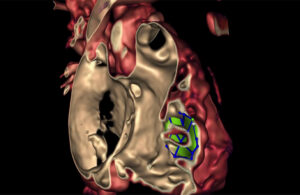
Taking two-dimensional patient scans and converting them into full visualizations of complex anatomy can not only prepare the surgeon before entering the operating room, but also help guide them in real time during the procedure. However, processes can vary widely between centers, spanning 3D-printed physical models and virtual simulations.
“If we are successful in scaling this tool across the field, it could transform the nature of how congenital heart surgery gets performed for children with CHD,” said Orin Herskowitz, president of the Mussallem CHD Alliance, which was formed by the Mussallem Foundation in September 2025.
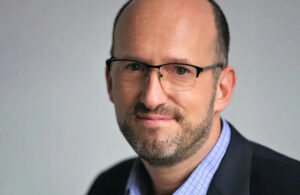
Mussallem CHD Alliance President Orin Herskowitz [Photo courtesy of the Mussallem CHD Alliance]
Related: Mussallem Cardiovascular Accelerator launches for breakthrough tech startups
In the future, the group hopes to obtain an FDA clearance for a software platform built specifically for CHD care. In the meantime, the collaboration will offer hospitals without in-house capabilities the opportunity to access their expertise.
“Collaboratively building software and simulation tools dedicated to informing successful repairs for kids with congenital heart disease everywhere is a dream come true for our team,” said Dr. Matthew Jolley, the Topolewski Endowed Chair in Pediatric Cardiology at Children’s Hospital of Philadelphia.