Stryker designed Mako RPS for surgeons and ambulatory surgical centers that want something more than a manual tool but not the full complexity of the Mako robotics system.
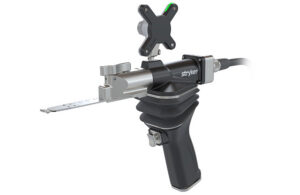
Stryker’s Mako RPS [Image courtesy of Stryker]
“This is a really great solution for some surgeons that aren’t ready to go through the change management of Mako,” Stryker CEO Kevin Lobo said in January.
Mako RPS will also appeal to ambulatory surgical centers (ASCs) that don’t want the complexity of a Mako robotics system, he said.
“It’s going to open up new customers for us that weren’t ready for Mako, but want something better than using the manual instruments,” Lobo said.

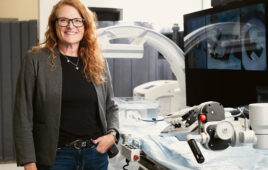
Stryker Chair and CEO Kevin Lobo [Photo courtesy of Stryker]
Compared to Mako and its robotic arm, Mako RPS more closely resembles the non-robotic power tools many surgeons are familiar with. But Stryker says Mako RPS borrows from Mako’s intellectual property to offer similar features and limit the need for major changes for surgeons, staff and ASCs, making adoption of the device easier and more appealing.
What’s different about Stryker’s new Mako RPS
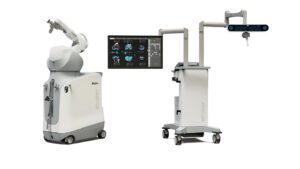
Stryker’s Mako SmartRobotics system includes a mobile, single-arm robotic system (left) and guidance system (right). [Image courtesy of Stryker]
But like Mako, the Mako RPS features patented active adjustment technology, which responds to the surgeon’s hand movements, guiding the saw to stay aligned with the surgical plan, Stryker said.
The technology also limits blade power when used outside the pre-operative boundaries, but surgeons have the ability to modify the plan when necessary. Both systems are equipped with haptic feedback.

For comparison to Mako RPS, this is Stryker’s Mako Integrated Cutting System (MICS) 3 handpiece (with attachments and blades) for the Mako 4 surgical robotics system. [Image courtesy of Stryker]
Mako RPS’s integration in knee replacement surgery has already begun, with Lobo saying initial cases with the device are going “extremely well.”
Stryker announced a limited market release of Mako RPS in early February and plans to display the device at the American Academy of Orthopedic Surgeons annual meeting.