Fractyl’s Revita system uses a single-use catheter for hydrothermal ablation in an endoscopic procedure called duodenal mucosal resurfacing. [Illustration courtesy of Fractyl Health]
The Revita system consists of a single-use catheter for hydrothermal ablation that targets the duodenal mucosa, or the first 25 cm of the small intestine beyond the stomach. Revita is used in an investigational, minimally invasive endoscopic procedure called duodenal mucosal resurfacing (DMR) to restore normal duodenal function.
“Our thought was if you can ablate the duodenal mucosa and reverse it back, now you’re affording people an opportunity at a clean slate, the potential to hit the metabolic reset button,” Fractyl Health co-founder and CEO Harith Rajagopalan said in a Medical Design & Outsourcing interview.
Medtech Big 100: Join MDO editors for a discussion of the top movers and trends in our upcoming ranking of the world’s largest medical device companies
After releasing positive data from the company’s clinical trial, Rajagopalan called Revita “LASIK for obesity” since it targets the underlying cause of disease “with a single outpatient procedure rather than relying on chronic medication.”
The procedure is simple, takes about an hour and most patients don’t experience symptoms, he said.
“All a person’s told is that they can’t eat or drink anything after dinner the night before the procedure,” he said. “Everything that we introduce — the catheter, the endoscope — is introduced through the mouth, past the stomach, and then into the duodenum where the procedure is being performed.”
Rajagopalan explained to MDO how Revita works, why Fractyl chose hydrothermal ablation and how his system tackles the underlying problem of weight management.
The following has been lightly edited for space and clarity.
MDO: How does Revita work?
Rajagopalan: “We have developed a single-use catheter and component combined with an electromechanical console. So there’s a Revita catheter and Revita console, and both are part of the Revita system. That system enables a one-time outpatient transoral endoscopic procedure to ablate the duodenal mucosa in a manner that can be delivered in a standardizable manner and is designed for safety.
“The energy that we use is hydrothermal. What that means is we recirculate hot water through the catheter, into a PET (polyethylene terephthalate) balloon at the end of the catheter that gets to about 90° C centigrade — or about nearly 190° F — and stays at that temperature for about 10 seconds, which is just enough time to deliver enough energy through the balloon material to the mucosa it’s touching when inflated to cause the proteins in those cells to denature, to unfold in the heat, and that in turn kills the cells within the top half a millimeter or so, the mucosal cells and the superficial submucosa.
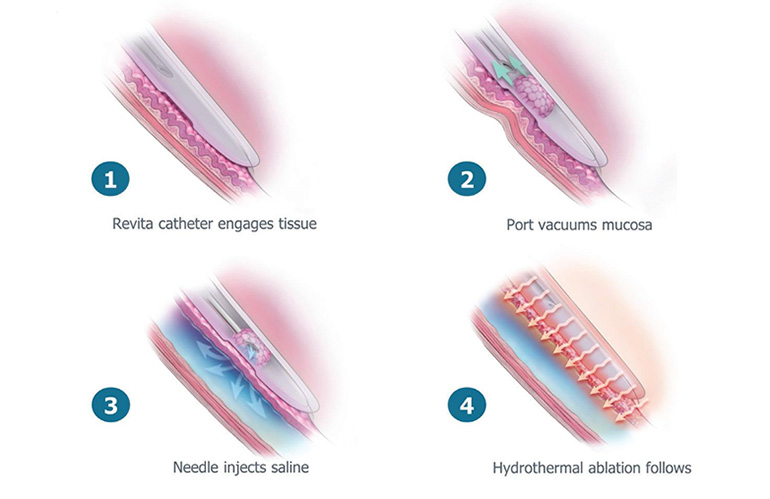
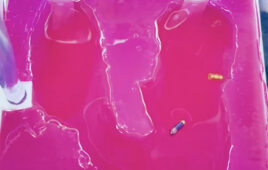
Revita’s procedure involves a circumferential saline injection along three points within the duodenum to protect the muscle from damage during ablation. [Illustration courtesy of Fractyl Health]
“The Revita procedure involves placing our catheter down into the duodenum with direct endoscopic visualization through the mouth, past the stomach, and then into the duodenum. There’s a circumferential saline injection along three points on the outside of our catheter that essentially pumps up the wall with saline to thicken the duodenal lining. The duodenum is very thin-walled, so this thickens the middle layer of the duodenum, the submucosa, which is kind of like a cellular spongy matrix between the mucosa that you wish to ablate and the muscle you don’t want to damage where the pain fibers are. If you put saline into the submucosa, it expands really nicely and creates a thermal cushion underneath the mucosa to allow you to safely ablate it without damaging the underlying muscle.”
Watch on-demand: The 2026 MDO Min-Vasive Medtech webinar series
Is the therapy permanent or can the disease return over time?
Rajagopalan: “No one is born with obesity and type 2 diabetes. It develops over a person’s lifetime. We think the reason it develops is if you chronically consume over years an unhealthy diet full of high-fructose corn syrup, high fats, simple sugars, you’re going to cause changes to the mucosa of the duodenum, which is the first part of the small intestine and a critical metabolic signaling center. Those changes not only change the structure of the duodenal lining, but they also change its functional ability to sense nutrients and communicate to the body, and we believe that is the root cause of obesity and type 2 diabetes, this abnormal nutrient sensing caused by damage to the duodenal lining. If you think about bad diets being attractive, causing mucosal disease, that then reinforces the appetite for unhealthy diets.

Fractyl Health co-founder and CEO Harith Rajagopalan [Photo courtesy of Fractyl Health]
“Our thought was if you can ablate the duodenal mucosa and reverse it back, now you’re affording people an opportunity at a clean slate, the potential to hit the metabolic reset button. If you can consume a healthy diet thereafter because you don’t have that physiologic drive driven by the abnormal mucosa to eat unhealthy, you can break that vicious cycle and then lead a healthier life. But if you still choose to eat unhealthily, the benefit of Revita is that we think it has multi-year durability anyway. Because it takes years to develop this disease, if you do a good job of treating the duodenum, then you’re going to have lasting benefit thereafter.”
Listen for more on DeviceTalks: Is Fractyl poised to create a new medtech market by helping former GLP-1 users keep weight off?
What influenced the decision to use ablation?
Rajagopalan: “I actually developed Revita after I started the company. My wife being a gastroenterologist influenced ablation. Once it became clear the duodenum is becoming diseased from chronic exposure to high-fat and high-sugar diets, and that’s why we’re developing obesity and type 2 diabetes, my immediate question was what can we do about it that could have long-lasting benefit? I would pepper my wife over the dinner table with questions about the types of procedures that gastroenterologists do, how easy is it to get to the duodenum with an endoscope, what does it look like, what was she comfortable doing, what was she not comfortable doing and what was she worried about?

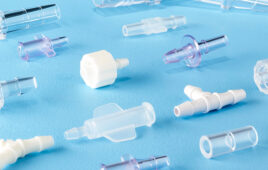
Revita’s single-use catheter (pictured here) is introduced through the mouth and navigates the stomach before reaching the duodenum. [Image courtesy of Fractyl Health]
“The other thing is the duodenum is very, very active. If you get a bolus of food in the duodenum, the duodenum is going to try to work to push it through, and that dynamic nature of the duodenum lent itself to like another problem. How can you do something that’s at the scale of the disease, given that we have like 100 million people with obesity in the U.S.? One thing that she pointed out is that we do about 20 million colonoscopies each year in the U.S. So over a five-year period of time, you’re doing colonoscopies in about 100 million people. So if you could do something that has a multi-year benefit and was sort of at the colonoscopy level of scalability, you could do something that could actually address at a population level a disease even as big as obesity.
“There aren’t many things that you could expect a gastroenterologist to do at that level of scale, but they use energy to remove polyps in the colon during a colonoscopy. What if we used energy to ablate the diseased mucosa in the duodenum? That felt like it would make sense to us from a cellular disease standpoint, but also made sense from a product standpoint. Now that you want to use ablation, there are a lot of different types of energy out there, a lot of different ways to do it. How are we going to do it for this unique anatomy?”
We’ll have more from this interview at Medical Design & Outsourcing. Subscribe to our free newsletter to watch for the next part.