Intuitive’s global VP of cardiac surgery traces how global connection, sponsorship, and inclusive design reinforce each other.
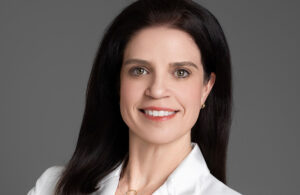
Intuitive Surgical Global VP of Cardiac Surgery Darla Hutton [Photo courtesy of Intuitive]
“There weren’t a lot of women in leadership, at least on the commercial side of the business,” said Hutton, who’s now global VP of cardiac surgery for the surgical robotics developer.
Today, it’s a different story. There are more women in leadership and more women involved earlier in device design to better represent the doctors who use their products and the patients they treat. For example, Intuitive’s new da Vinci 5 system has a redesigned surgeon’s console that can accommodate a pregnant doctor at the controls even through their third trimester.
“That never would have happened if five or six years ago we didn’t have women sitting at the table designing that,” Hutton said.
In an interview at the DeviceTalks West 2025 Women in Medtech Breakfast, Hutton recalled her effort to start an Intuitive women’s group “with the goal of increasing representation, helping women fight this inner critic that we have in our heads, helping women find their voice at the table.
“Through mentorship, sponsorship and allyship, we would end up raising women across the org,” she said. “And it worked. Our whole world and organization has changed because of that.”
The new internal direction didn’t stay internal for long.
In conversations with customers, Intuitive learned women surgeons “were actually struggling with very similar things that we were struggling with,” said Hutton. “It was the same conversation.”
From there, Hutton took the model and moved it beyond the U.S.
Related: The power of fearless leadership in uncertain times
Authentic, global connection changes what’s possible

The Intuitive Surgical da Vinci 5’s surgeon console [Image courtesy of Intuitive Surgical]
“I wasn’t sure that we could do it because we were working across five different Asia countries with five different, very distinct cultures,” Hutton said. “And the question was could you put them all in a room and would it be worthwhile to talk about it?”
Instead of treating culture as an obstacle to push past, Hutton made it part of the agenda.
“You had some cultures that are a little more introverted than others,” she said, “and there needed to be this curiosity about learning about each other … learning where people’s mindsets were coming from, and learning how they show up authentically at work and what they were struggling with.”
It was then that the real shift happened.
“Once you learned about the cultures, you started to see the interaction changing, where they were making sure that everybody had a voice at the table,” Hutton said.
The exchange uncovered cultural differences and how, by honoring them, they can work together more effectively and more authentically.
“It was just this fascinating discussion of watching them support one another,” she said. “And I don’t think it’s any different than sitting in a room like this in the U.S. where we all come from different backgrounds and cultures.”
Related: Inclusive medical device design is no longer optional
Mentors guide. Sponsors decide. Leaders make it repeatable.
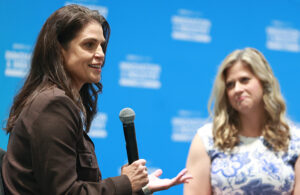
Intuitive Surgical Global VP of Cardiac Surgery Darla Hutton (left) and DeviceTalks Managing Editor Kayleen Brown offered mentorship and leadership advice at the DeviceTalks West 2025 Women in Medtech Breakfast. [Photo courtesy of DeviceTalks]
“A mentor is somebody that you can lean on, that you can talk to, that you can share your innermost thoughts so that they can guide you,” she said. “A sponsor is somebody that maybe you don’t share everything with, but you need these people because they’re making decisions about you when you are not in the room.
“Every important decision in your career is typically made when you are not in the room,” she continued.
Mentorship and sponsorship only scale when they are treated as business practices rather than private relationships. “In order to do those things, we have to be able to build community, and it’s these communities that will help support everyone.”
Hutton shared a way for women like her to build others up. She calls it “the extra door.”
“Whenever I have someone come to me either for an opportunity like this or for advice, I try to not only open the door to the first elevator ride, but I try to send them to another female leader that can also open a different door for them. What that does is it creates a larger connection. It helps the person that you’re creating the community for. It also helps more female leaders get recognized. It gives them a voice to start to be the one on the stage.”
When leaders build that kind of community and sponsorship, it advances women and helps keep top talent in the position to influence the decisions that matter.
“For those of you that are developing products, I believe very much in inclusive design,” she said. “And we don’t do it enough in medtech.”
Hutton pointed to some familiar examples of design oversight outside of medtech.
“Crash test dummies in the automotive industry were based on a male’s profile and so for years safety was based on that and not based on our body habitus,” she said. “You had NASA going to put the first female astronaut group together [but] didn’t actually design suits that fit them.”
The same was true in medtech for a long time, with laparoscopic and handheld devices where “women weren’t strong enough or even men with small hands weren’t strong enough to power these devices, and so they had to be redesigned.”
Inclusive design takes creativity, she said, “and that creativity requires diversity around the table, which means we need women in the design process.”
If you build authentic connections across cultures, make mentorship and sponsorship repeatable, and make space for women to show up earlier in conversations that shape what gets built, you’ll turn representation into a measurable advantage.
“It changed my whole perspective about what we can do in medtech,” Hutton said. “When we collectively bring our voices together, there’s this global ripple that can happen.”
Medical Design & Outsourcing magazine: The October 2025 MDO Women in Medtech issue