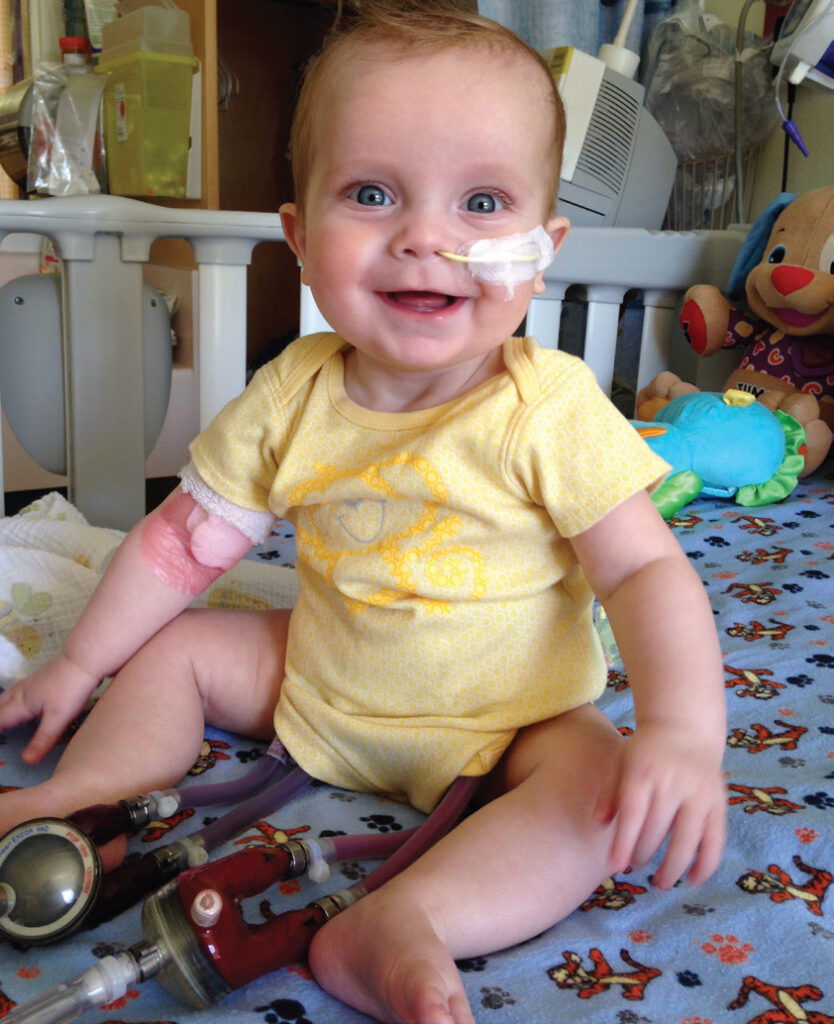
Berlin Heart’s Excor Pediatric is the only FDA-approved ventricular assist device for infants and children awaiting heart transplants. [Photo courtesy of Berlin Heart]
The FDA added pediatric VADs to its device shortage list this week and said the shortage might last until 2026.
“The demand for these products for these children has just escalated to a point where we’ve not been able to keep up,” said Bob Kroslowitz, president and CEO of Berlin Heart America. “While we have adjusted ourselves and our plans, these things don’t happen as quickly as we need them to happen.”
Berlin Heart America is the Texas-based U.S. arm of Berlin Heart, which makes Excor Pediatric VADs in Berlin, Germany. The FDA authorized the use of the devices under a Humanitarian Device Exemption in 2011 and granted premarket approval (PMA) in 2017.
Today, Berlin Heart’s Excor Pediatric is the only device approved to provide mechanical circulatory support as a bridge to cardiac transplantation for pediatric patients, keeping their blood pumping through their failing ventricles.
“Our business is small here,” Kroslowitz continued. “We treat only about 400 patients a year in the U.S. When you have that sort of low volume and small size business, it’s hard to be able to ramp up quickly.”
The number of U.S. patients on Berlin Heart’s VADs is up 30% from the year before as they wait more than twice as long for heart donations, he said.

Berlin Heart’s Excor Pediatric VAD provides mechanical circulatory support as a bridge to cardiac transplantation for pediatric patients. [Image courtesy of Berlin Heart]
“Demand for donor hearts has grown tremendously. There’s not enough organs to meet the need, so here we are,” he said. “… We’re a pretty unique company. We’re a Class III medical device that treats children that are dying, and have the only FDA-approved device available for them.”
Berlin Heart’s manufacturing output was limited by its supply of drive units, but the company has adjusted its production forecast and started to ramp up, Kroslowitz said. He hopes the shortage will be addressed within six to eight weeks.
“These things aren’t made overnight,” he said.
MDO Min-Vasive Medtech: Join us for live interviews with minimally invasive device development experts in pediatrics, structural heart and catheter tech
Import taxes add a new barrier
But even if the company is making more of these life-saving devices, can hospitals afford more of them with President Donald Trump saying he’ll tax imports from the EU?
Medical device industry association AdvaMed has warned that new tariffs could cause supply chain problems and hurt the patients who rely on devices like these.
Previously: Manufacturers report price increases and other tariff troubles
“Tariffs have complicated things for us a little bit. … All our product is manufactured in the EU,” Kroslowitz said. “If this happens, we’re going to be in a difficult position.”
Larger medtech companies aren’t interested in developing or manufacturing pediatric VADs because it’s a low-volume, low-revenue business, he said. And he doesn’t think hospitals will be willing or able to buy more of these devices at a higher cost if and when new taxes on EU imports kick in.
“It certainly can’t be passed along to our customers, so we’re trying to figure out what we’re going to do,” he said. “It’s not going to be a very bright future. … Budget cuts are killing the hospitals. Hospitals don’t have any more money to pay. And insurance companies are great — until you need them to pay you.”
Small patients, big design challenges: Pediatric device experts guide engineers on solutions