We asked the device startups that won funding at the 13th annual Symposium on Pediatric Device Innovation in Boston during AdvaMed’s October 2026 MedTech conference to share their award-winning pitches with us. Cerulean Scientific received a $75,000 gold prize for its omniphobic-coated, failure-resistant intraventricular catheter.
By Tim Hopper, Cerulean Scientific
I’m Tim Hopper, CEO of Cerulean Scientific. And these are the little faces of hydrocephalus, excess cerebral spinal fluid (CSF) in the brain.

[Image courtesy of Cerulean Scientific]
These three have had multiple shunt revision surgeries since birth, a kind way of saying shunt failure and another brain surgery, and another hole in their heads.
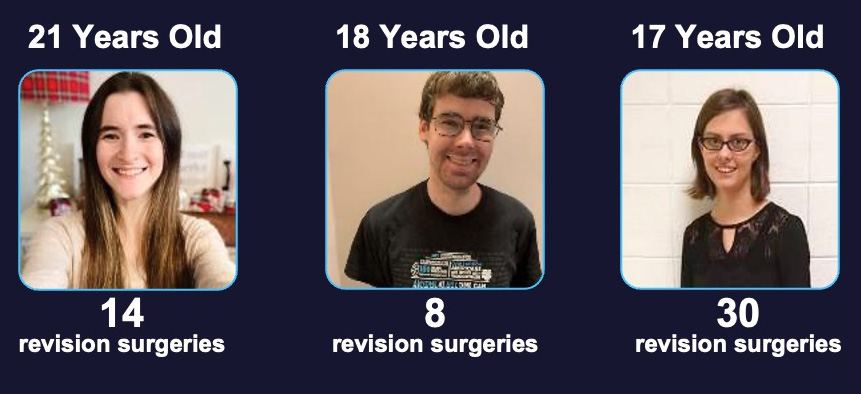
[Image courtesy of Cerulean Scientific]
The standard treatment for hydrocephalus is a shunt with a ventricular catheter that drains excess CSF from the brain. But these shunts fail: 40 percent within a year, 98 percent within 10 years. Cells and protein clog the catheter holes, and they can’t drain.
In the U.S., shunt failures causes about 10,000 pediatric admissions a year, part of $1.4 billion to $2 billion in annual hospital charges.
Our catheter uses Cerulean Surface Technology, exclusively licensed from Harvard’s Wyss Institute. It holds a thin layer of inert liquid on the catheter surface so cells and proteins have nothing to stick to and the catheter stays clog free. There’s no drug, so nothing runs out and it’s in the same form surgeons place today.
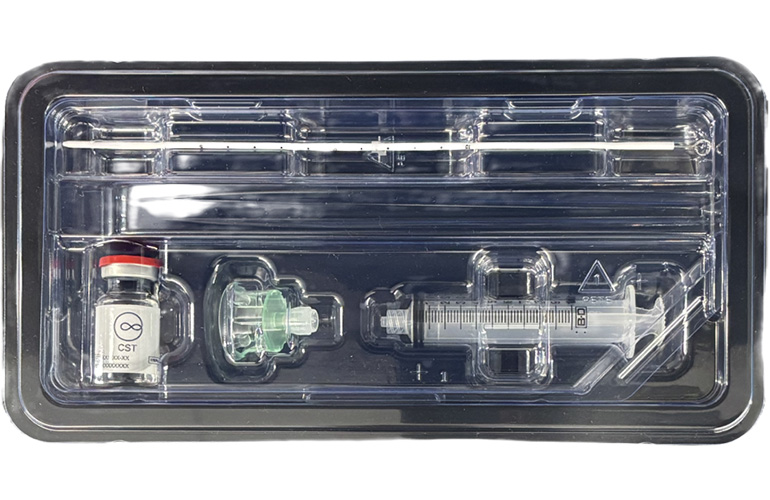
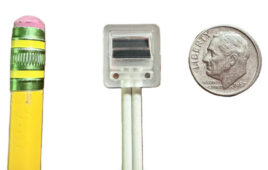
Cerulean Scientific’s failure-resistant intraventricular catheter [Photo courtesy of Cerulean Scientific]
No shunt catheter study has gone past 45 days. We’re going to 90, measuring total cell attachment against the market-leading antimicrobial catheter because durability is the claim that matters. The main study begins around the turn of the year.
From our FDA pre-sub, we’ve confirmed product code JXG using the Class II 510(k) pathway. Cleared catheters with this code carry one indication that includes pediatric patients, and we intend the same.
Related: How device innovators can make the most of FDA’s TAP accelerator
Commercially, we start with revision surgery. Surgeons have no catheter with published animal evidence that it resists clogging, and they need an alternative to one that already failed that child. We’ve identified the hospitals and neurosurgeons doing the most revisions, and they are our initial targets. We are also in distribution talks with a major player in this market.

Cerulean Scientific CEO Tim Hopper [Photo courtesy of Cerulean Scientific]
We also use outside medical device quality, regulatory and manufacturing firms, including one with direct hydrocephalus 510(k) submission experience.
$100,000 funds additional sheep for our 90-day study. Although a 510(k) under this product code doesn’t require a performance-based animal study, we’re running it to give our first neurosurgeon targets head-to-head data that our catheter outperforms today’s standard of care.
We welcome introductions to pediatric device collaborators and investors. Beyond hydrocephalus, we have other active programs in vascular access and dialysis catheters.
Let’s change the standard of care. Thank you.
Read more: AdvaMed and MedTech Innovator name 2026 prize winners and finalists
Read more MDO Contributions and learn how to submit your own.
The opinions expressed in this article are the author’s only and do not necessarily reflect those of Medical Design & Outsourcing or its employees.
Tell Us What You Think!
You must be logged in to post a comment.