This illustration depicts bronchial rheoplasty using the Galvanize Therapeutics RheOx catheter, which delivers energy to ablate abnormal mucus-producing cells in the airways. [Illustration courtesy of Galvanize Therapeutics]
The pulsed electric field (PEF) device developer announced its Series C funding round and the hiring of former Shockwave Medical CEO Doug Godshall as CEO of Galvanize in September 2025.
Godshall has chaired the Galvanize board since 2021. In 2024, he led the $13.1 billion sale of Shockwave to Johnson & Johnson MedTech, which is now poised to become the world’s largest medical device company thanks in large part to growth from Shockwave’s intravascular lithotripsy platform.
Related: How Shockwave sealed the deal that could put J&J back on top
Formed in 2022 by a three-way merger, Galvanize is backed by Sofinnova Partners — as was Shockwave — and Galvanize is also developing systems for catheter-delivered energy. Based in Redwood City, California, the startup already has a CE mark for its RheOx system for treating chronic bronchitis symptoms and FDA 510(k) clearance for its Aliya and Inumi devices for soft tissue ablation.
Oncology is the next target, with technologies in the pipeline for lung cancer, hepatocellular cancer (the most common liver cancer), renal cell carcinoma (the most common kidney cancer) and breast cancer. Those programs are in the pre-clinical and/or feasibility stages, according to the company’s website.
How Galvanize’s products work

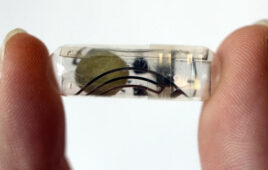
The Galvanize Therapeutics RheOx system includes a generator and expandable catheter. [Illustration courtesy of Galvanize Therapeutics]
The RheOx bronchoscopic system ablates “abnormal mucus-producing cells in the airways, leaving the extracellular matrix intact so that the epithelium may rapidly regenerate,” Galvanize says at its website.
Similarly, the Galvanize Aliya PEF System (which includes the Aliya Generator, the Aliya Ablation Device and the Ivy Biomedical Model 7600 cardiac monitor) and the Inumi Flex needle both deliver PFE to induce cell death.
Galvanize says its Aliya Generator has an algorithm that interprets trigger signals from the cardiac monitor and “will only allow the initiation and delivery of energy output when the patient’s heart rate is within acceptable limits.”

The Galvanize Therapeutics Aliya System is designed for percutaneous ablation of soft tissue lesions. [Illustration courtesy of Galvanize Therapeutics]
“Both the needle and electrode are designed for sterile, single use,” Galvanize explained in its 510(k) submission. “The Aliya Needle consists of a 19-gauge, 20-cm needle with a 1-cm exposed tip and a nested stylet (which is removed once the Aliya Electrode is in position). The Aliya Electrode consists of a 21-cm probe that connects with the needle, a 3-meter cable, and a plug that connects with the Aliya Generator. When connected to the Aliya Generator, the Aliya Ablation Device delivers PEF energy to the target zone at the distal 1 cm of the needle.”

The Galvanize Therapeutics Inumi Flex needle [Image courtesy of Galvanize Therapeutics]
Galvanize says its Aliya System (both percutaneous and endoscopic use) allow for precise, constant ablation zones without heat sink effects.
Galvanize’s cancer pipeline
Galvanize says data from its preclinical and early clinical studies “suggest the nonthermal cell death induced by PEF may release antigens from the dying tumor cells that may stimulate an immune response for a system effect beyond focal ablation. This may be synergistic with and additive to standard of care therapies.”
In August 2025, the company said it enrolled the first patient in the Propel Registry, a multicenter observational study evaluating the Aliya system for soft tissue lesions, including primary and metastatic lesions in the lung, liver and other organs.
“Interventional pulmonology has been focused on diagnosing lung cancer over the last few decades,” Director of Interventional Pulmonology and Associate Professor of Medicine at Duke University Medical Center Dr. Kamran Mahmood said in a news release after completing the first case. “Now we are shifting our attention to ablating the lesion.”
Galvanize said the registry would enroll up to 1,000 patients across up to 50 U.S. centers, following patients for up to two years.
“The Propel Registry is an important step in understanding how Aliya performs in a broad, heterogeneous patient population outside of a prospective trial setting,” Galvanize Chief Medical Officer Dr. Bill Krimsky said in the announcement. “By systematically capturing procedural data, clinical outcomes, and physician experience, we aim to inform evidence-based integration of our PEF ablation into clinical care pathways.”
In May 2025, Galvanize touted results from its Incite ES study of PFE in non-small cell lung cancer (NSCLC) patients.
“Aliya PEF ablation showed 100% technical success and integrated seamlessly into existing care pathways,” study investigator Dr. Marcelo Jimenez at Salamanca University Hospital in Spain said in a news release. “By performing ablation and biopsy in a single anesthetic event, this study showed that Aliya PEF offered the ability to integrate Aliya into existing clinical workflows without requiring a second anesthetic event for early-stage NSCLC.”

Galvanize Therapeutics CEO Doug Godshall [Photo courtesy of Shockwave]
“Galvanize’s Aliya and RheOx technologies hold great promise in the fields of solid tumor oncology and chronic bronchitis,” he continued. “There are millions of patients who are underserved by today’s largely pharmaceutical approaches, and I feel fortunate to be able to join the team as we seek to meaningfully improve the outcomes of those who are suffering with these chronic diseases.”
MDO Min-Vasive Medtech: Watch on-demand interviews with minimally invasive device engineers in pediatrics, structural heart and catheter tech