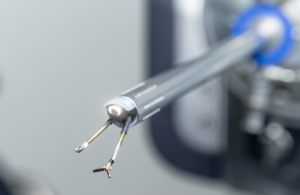
Virtuoso Surgical’s two needle-sized robotic arms extend from a standard-size endoscope. [Photo courtesy of Virtuoso Surgical]
Virtuoso’s electromechanical robotic system won FDA Breakthrough Device designation in 2025. More recently, FDA gave the system de novo authorization in October 2026 for obtaining bladder tissue samples from adult patients by en bloc lesion resection to assist in bladder cancer diagnostic evaluation.
“Removing a tumor intact can provide a better tissue specimen, which supports clearer diagnosis and staging,” Virtuoso Surgical CEO Dr. Duke Herrell said in an announcement of the FDA’s decision.
MDO’s nitinol resources page: Nitinol news, OEM expertise and supply chain updates
An estimated 84,530 Americans will be newly diagnosed with bladder cancer in 2026, and 75,000 more are estimated to have disease recurrence or progression, according to the American Cancer Society.
Tumors are currently resected in fragments via a minimally invasive transurethral approach, typically with a rigid endoscope. But that fragmented approach could cause tumor cells to reimplant in other areas of the bladder, leading to early cancer recurrence and impeding staging determination and treatment plans if the resected muscle isn’t obtained or able to be evaluated, which happens in up to 40% of cases, according to a study published in Nature Reviews Urology.
MDO interview: How device innovators can make the most of FDA’s TAP accelerator
Virtuoso’s technology allows for intact lesion removal to preserve the tissue needed for pathologist evaluation. The system also “reduces the need for awkward and potentially dangerous endoscope movements and enables the surgeon to manipulate tissue as though their hands were inside the body,” the device developer says.
The system’s two needle-sized robotic arms make the breakthrough technology possible.
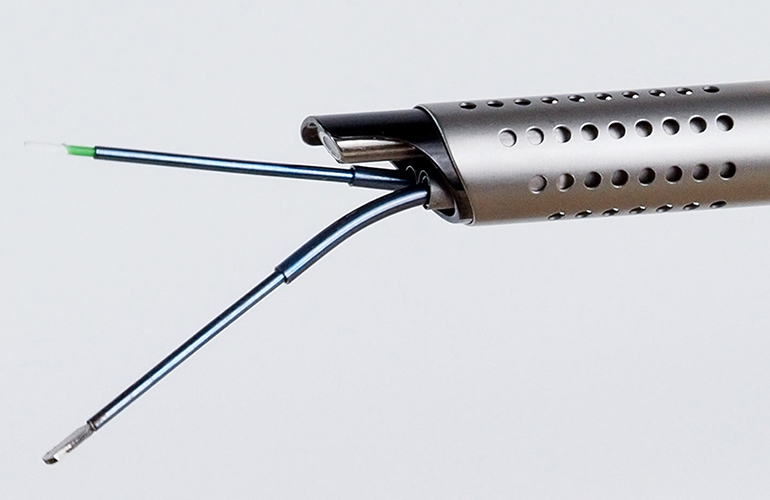
The system has two nitinol arms that give surgeons two-handed dexterity during endoscopic procedures. [Photo courtesy of Virtuoso Surgical]
Both 1 mm arms are made of superelastic concentric curved, nested nitinol tubes that “controllably bend as they twist and telescopically extend,” the company says. When the two nested elastic tubes are rotated with respect to one another, the tubes bend one another, enabling controllable manipulation.
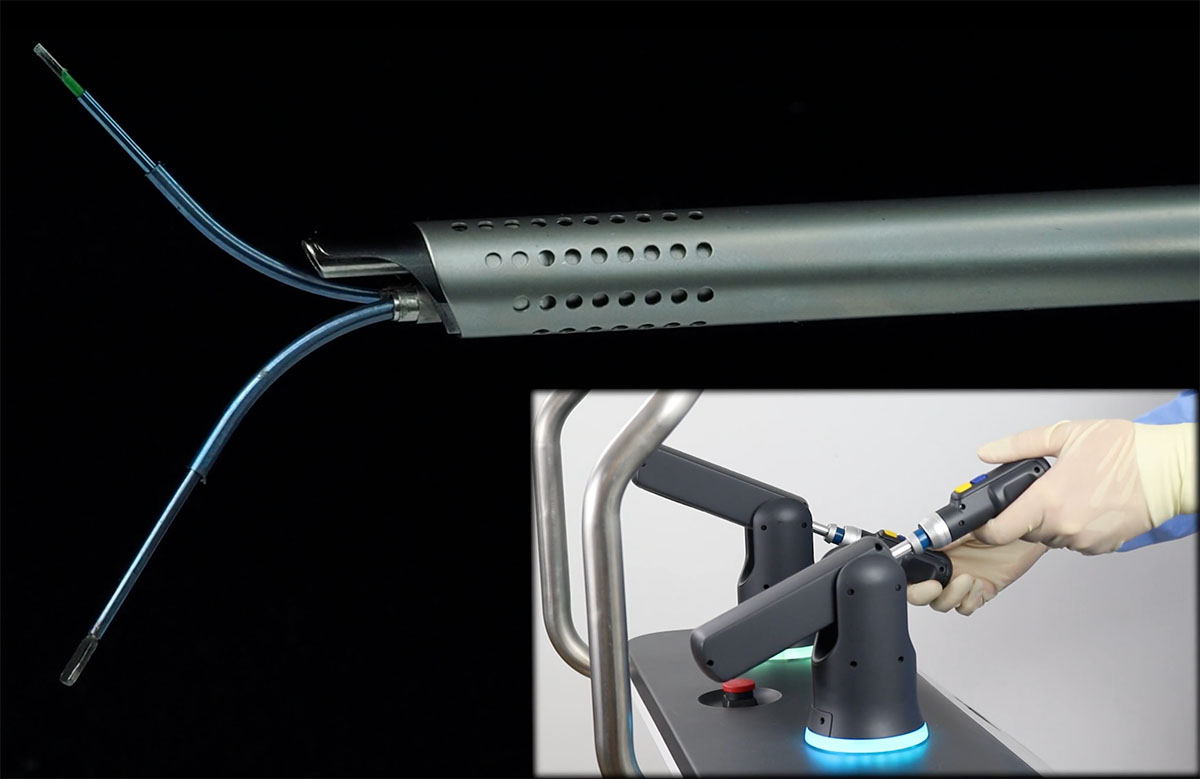
These images show the surgeon controls for the Virtuoso Surgical robot. [Images courtesy of Virtuoso Surgical]
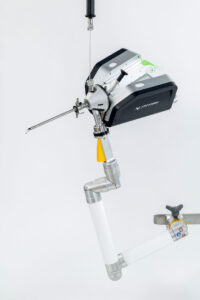
FDA granted de novo authorization for Virtuoso’s electromechanical robotic system in October 2026. [Photo courtesy of Virtuoso Surgical]
Virtuoso’s current system provides three instruments: a laser-compatible instrument, a biopsy forceps-compatible instrument and a retraction spatula instrument. All instruments are single-use and could be used on either side of the drive unit.
“Virtuoso has designed manipulators that are many times smaller than other robotic surgical instruments,” the company says. “This enables the surgeon to fit tools into previously unreachable areas of the body and paves the way for new therapies, all through a single port that is less than one centimeter in diameter.”
The company sees its miniature tools as “a future platform for other procedures and surgical specialties that use rigid endoscopes.”
“Rigid endoscopes are currently used in almost every area of surgery, including neurologic, thoracic, orthopedic, urologic, and gynecologic procedures, the company said.
As Virtuoso prepares to launch its robotic system at leading urology centers in 2027, it’s already completed early investigational non-human feasibility work in gynecology, neurosurgery and pulmonary procedures to advance the company’s mission of bringing “the benefits of robotic technology to endoscopy for surgeons and patients worldwide.”