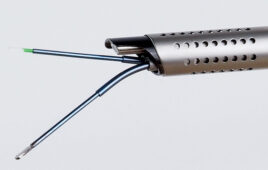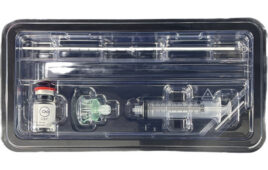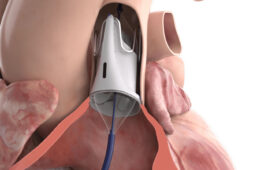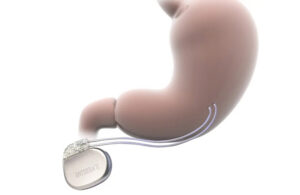
Enterra Medical describes its Enterra II implant as “an advanced therapy option that is designed to relieve nausea and vomiting symptoms of gastroparesis.” [Image courtesy of Enterra Medical]
The agency also added 11 new product codes to its medical device discontinuance list. Among FDA’s latest additions to the list of permanently discontinued devices are Abbott CPS Direct percutaneous catheters, SunMed Group Holdings arterial blood sampling kits and Resmed’s Astral 100 and Astral 150 ventilators.
ResMed discontinued its Astral ventilator portfolio in September 2026, just a few months after warning patients to stop using certain Astral 100 (model No. 27001) and Astral 150 (model no. 27003) ventilators after identifying an issue related to the printed circuit board assembly that could cause the ventilator to enter a fail-safe state. FDA later classified the issue as a Class I recall, the most serious type, following at least five serious injuries.
Explaining the discontinuation, Resmed told customers it assessed its long-term component supply outlook and that “ongoing supply constraints affecting critical electronic components have created significant challenges for the continued manufacture of Astral ventilators.”
Implantable gastric electrical stimulation system developer Enterra Medical also cited a shortage of electronic components needed to manufacture its Enterra II neurostimulator. Due to the shortage, FDA has allowed Enterra Medical to distribute its next-generation Enterra Ascent system for patient use while it undergoes FDA review.
“Enterra Ascent may be distributed under an FDA enforcement policy for medical device supply shortages while the FDA’s review of the Enterra Ascent submission continues,” the company said in a statement. “This does not mean that FDA has approved Enterra Ascent or made any determination about its safety or probable benefit.”
The company said Enterra II is no longer available, and that Enterra Ascent is intended to provide the same treatment, but has design changes that have not yet been fully reviewed by the FDA. Enterra Medical said patient safety is its highest priority and that patients should consult their physician before use.
“There is limited experience with use of Enterra Ascent in humans,” Enterra Medical says. “Although your doctor will discuss the potential risks of the device with you, there may be other risks, side effects, or complications that are currently unknown or unexpected.”
Related: A boy’s death is a tragic example of foreseeable risk in device design
The company expected shipments of the next-generation device to begin in November 2026, with limited initial supply. Enterra Medical said it’s increasing manufacturing of the device and expects availability to improve over the coming weeks and months, but it expected demand to remain higher than supply.
“Because many patients are already waiting for treatment, demand is expected to far exceed available supply early on,” the company said. “… timing will depend on several factors, including manufacturing output and demand. Enterra Medical cannot guarantee when a device will be available for any individual patient.”
FDA expects the shortage to last through the fourth quarter of 2027.
June 2026: FDA device shortage update includes bloodlines, biopsy needles and more